The Heartbeat of Polka Lives Here

The Heartbeat of Polka Lives Here

Explore the Hall of Fame and digital archives that honor the legends, preserve the music, and celebrate the joy of polka for generations to come.

Learn More

Now Live: Archives

Check back soon as we continue to add more exciting pictures, documents, and other historic materials.

Preserving polka's legacy by honoring its greatest contributors

Since 1968, the International Polka Association Hall of Fame has celebrated the artists, pioneers, and champions who shaped and sustained polka music in America. Through a national selection process, the Hall honors lasting contributions—from foundational trailblazers to modern legends—preserving the people and stories behind the music that keeps polka alive.

About IPA Hall of Fame and Archives

Meet The IPA Hall of Fame Inductees

Meet the artists, pioneers, and leaders who shaped polka music’s past and present. This collection features biographies, photos, and videos that bring the stories and legacies of IPA Hall of Fame inductees to life

"Big" Steve Krzeminski
"Happy" Louie Dusseault
"Jersey Polka" Richie Drongoski
"Jolly" Jack Robel
"Jolly" Jack Robel
"Jolly" Joe Timmer
"Jolly" Joe Timmer
"Whoopee" John Wilfahrt
Adam Barthalt
Adam Barthalt
Adam Nowicki
Adam Nowicki
Adolph Lesser
Adolph Lesser
Al Grebnick
Al Grebnick
Al Piatkowski
Al Piatkowski
Al Soyka
Al Soyka
Alex Meixner
Alex Meixner
Alfred Vrazel
Alfred Vrazel
Alvin Sajewski
Alvin Sajewski
Andy "Day" Dziagwa
Andy "Day" Dziagwa
Andy Fenus
Andy Fenus
Anthony Zebrowski
Anthony Zebrowski
Antionette Blazonczyk
Bernie Goydish
Bernie Goydish
Bernie Witkowski
Bernie Witkowski
Bill Czerniak
Bill Czerniak
Bill Czupta
Bill Czupta
Bill Shibilski
Bill Shibilski
Billy Belina
Billy Belina
Bob Earl, Sr.
Bob Earl, Sr.
Bruce Kryger
Bruce Kryger
Bruno "Junior" Zielinski
Bruno Mikos
Bruno Mikos
Brunon Kryger
Brunon Kryger
Carl Finch
Carl Finch
Carl Rohwetter
Carl Rohwetter
Casey Siewierski
Casey Siewierski
Charlie Hicks
Charlie Hicks
Chester "Chet" Zablocki
Chester Budny
Chester Budny
Chester Pala
Chester Pala
Chet Dragon
Chet Dragon
Chet Gulinski
Chet Gulinski
Chet Kowalkowski
Chet Kowalkowski
Chet Schafer
Chet Schafer
Cliff Hermel
Cliff Hermel
Craig Ebel
Craig Ebel
Dan Gury
Dan Gury
Dave "Scrubby" Seweryniak
David "Nigel" Kurdziel
David Zychowski
David Zychowski
Dean Hansen
Dean Hansen
Dee Dee Ogrodny
Dee Dee Ogrodny
Dennis Polisky
Dennis Polisky
Dick Pillar
Dick Pillar
Dick Rodgers
Dick Rodgers
Don Cialkoszewski
Don Cialkoszewski
Don Gralak
Don Gralak
Don Jodlowski
Don Jodlowski
Don Lucki
Don Lucki
Don Peachey
Don Peachey
Dr. William Lausche
Dr. William Lausche
Earl "Cousin Fuzzy" McNellis
Eddie Biegaj
Eddie Biegaj
Eddie Blazonczyk
Eddie Blazonczyk
Eddie Forman
Eddie Forman
Eddie Habat
Eddie Habat
Eddie Korosa
Eddie Korosa
Eddie Oskierko
Eddie Oskierko
Eddie Siwiec
Eddie Siwiec
Eddie Skinger
Eddie Skinger
Eddie Zavaski
Eddie Zavaski
Eddie Zima
Eddie Zima
Edward Guca
Edward Guca
Edward Kutas, Sr.
Edward Kutas, Sr.
Ellsworth "Babe" Wagner
Elmer Scheid
Elmer Scheid
Emily Pinter
Emily Pinter
Ernie Kucera
Ernie Kucera
Fezz Fritsche
Fezz Fritsche
Florian Chmielewski
Florian Chmielewski
Frank Borzymowski
Frank Borzymowski
Frank Liszka
Frank Liszka
Frank Wojnarowski
Frank Wojnarowski
Frankie "Gee" Grybosh
Frankie Yankovic
Frankie Yankovic
Fred Bulinski
Fred Bulinski
Fred Hudy
Fred Hudy
Fred Ziwich
Fred Ziwich
Freddy "K" Kendzierski
Gary Brueggen
Gary Brueggen
Gary Rhamy
Gary Rhamy
Gary Seibert
Gary Seibert
Gene Swick
Gene Swick
Gene Wisniewski
Gene Wisniewski
Hank Haller
Hank Haller
Harold Loeffelmacher
Henry "Hank" Guzevich
Henry "Henny" Jasiewicz
Henry "Will" Wilczynski
Henry Jasiewicz
Henry Jasiewicz
Henry Mocarski
Henry Mocarski
Ignacy Podgorski
Ignacy Podgorski
Jackie Libera
Jackie Libera
Jan Cyman
Jan Cyman
Jan Robak
Jan Robak
Jerry Darlak
Jerry Darlak
Jerry Goetsch
Jerry Goetsch
Jimmy Sturr
Jimmy Sturr
Jimmy Weber
Jimmy Weber
Joe "Pat" Paterek
Joe "Pat" Paterek
Joe Czerniak
Joe Czerniak
Joe Fiedor
Joe Fiedor
Joe Lazarz
Joe Lazarz
Joe Macielag
Joe Macielag
Joe Marcissuk
Joe Marcissuk
Joe Oberaitis
Joe Oberaitis
Joe Rock
Joe Rock
Joe Wojkiewicz
Joe Wojkiewicz
Joe Zalewski
Joe Zalewski
Joey Miskulin
Joey Miskulin
John "Jas" Przasnyski
John "Stanky" Stankovic
John Check
John Check
John Demerski
John Demerski
John Furmaniak
John Furmaniak
John Gora
John Gora
John Krawisz
John Krawisz
John Zelasko, Jr.
John Zelasko, Jr.
Johnnie Bomba
Johnnie Bomba
Johnny Haas
Johnny Haas
Johnny Hyzny
Johnny Hyzny
Johnny Karas
Johnny Karas
Johnny Krizancic
Johnny Krizancic
Johnny Libera
Johnny Libera
Johnny Menko
Johnny Menko
Johnny Pecon
Johnny Pecon
Johnny Vadnal
Johnny Vadnal
Joseph Fedorchak
Joseph Fedorchak
Joseph Struzik
Joseph Struzik
Keith Stras
Keith Stras
Kenny Bass
Kenny Bass
Kevin Adams
Kevin Adams
Larry Chesky
Larry Chesky
Larry Walk
Larry Walk
Lawrence Duchow
Lawrence Duchow
Lawrence Welk
Lawrence Welk
Lenny Gomulka
Lenny Gomulka
Leon "Bud" Hundenski
Leon Kozicki
Leon Kozicki
Li'l John Nalevanko
Li'l John Nalevanko
Li'l Richard Towalski
Li'l Wally Jagiello
Li'l Wally Jagiello
Lou Prohut
Lou Prohut
Lou Trebar
Lou Trebar
Lucian Kryger
Lucian Kryger
Marge Machay
Marge Machay
Marion Lush
Marion Lush
Marisha Data
Marisha Data
Mark Janson
Mark Janson
Mark Trzepacz
Mark Trzepacz
Marv Herzog
Marv Herzog
Math Sladky
Math Sladky
Matt Hoyer
Matt Hoyer
Matt Wasielewski
Matt Wasielewski
Mattie Madura
Mattie Madura
Michael Costa
Michael Costa
Michael Matousek
Michael Matousek
Michael Nowakowski
Michael Nowakowski
Mitch Biskup
Mitch Biskup
Mollie Busta Lange
Mollie Busta Lange
Myron Floren
Myron Floren
Norman "Fritz the Plumber" Marggraff
Pat Watters
Pat Watters
Paul Wendinger
Paul Wendinger
Peter J. Danielczuk
Peter J. Danielczuk
Peter Wendinger
Peter Wendinger
Randy Koslosky
Randy Koslosky
Ray Budzilek
Ray Budzilek
Ray Dorschner
Ray Dorschner
Ray Stolzenberg
Ray Stolzenberg
Raymond "Ray Jay" Jarusinski
Rev. Walter Szczypula
Rich Bernier
Rich Bernier
Richard Bobinski
Richard Bobinski
Richard Midura
Richard Midura
Richie Gomulka
Richie Gomulka
Richie Tokarz
Richie Tokarz
Rick Rzeszutko
Rick Rzeszutko
Roger Bright
Roger Bright
Roger Lichwala
Roger Lichwala
Romy Gosz
Romy Gosz
Stan Saleski
Stan Saleski
Stan Wolowic
Stan Wolowic
Stanley "Wesoly Stas" Lyskawa
Stanley Jasinki
Stanley Jasinki
Stanley Przasnyski
Stanley Przasnyski
Stas Bulanda
Stas Bulanda
Stas Golonka
Stas Golonka
Stephanie Pietrzak
Stephanie Pietrzak
Steve Adamczyk
Steve Adamczyk
Steve Meisner
Steve Meisner
Sylvester "Shep" Wolan
Ted Lange
Ted Lange
Ted Maksymowicz
Ted Maksymowicz
Ted Okrzesik
Ted Okrzesik
Teresa Zapolska
Teresa Zapolska
Tom Mrozinski
Tom Mrozinski
Tommy Altenburg
Tommy Altenburg
Tommy Karas
Tommy Karas
Tony "Krew" Krupski
Tony "Krew" Krupski
Tony Petkovsek
Tony Petkovsek
Verne Meisner
Verne Meisner
Virginia Johantgen
Virginia Johantgen
Virginia Seretny
Virginia Seretny
Wally Dombrowski
Wally Dombrowski
Wally Maduzia
Wally Maduzia
Walt Groller
Walt Groller
Walter Dana
Walter Dana
Walter Ostanek
Walter Ostanek
Walter Procanyn
Walter Procanyn
Walter Solek
Walter Solek
Wanda Pietrzak
Wanda Pietrzak
William "Wesoly Bolek" Borek
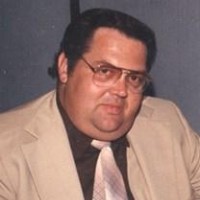
"Big" Steve Krzeminski

"Big" Steve Krzeminski

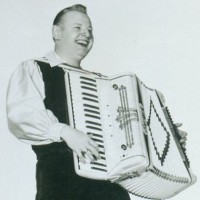
Born on June 5, 1945, in Buffalo, New York, Stephen w. Krzeminski was destined to make his mark in polka music.  Standing tall at 6 feet, 3 inches by the time he was 16 years of age, the charismatic accordionist first led Big Steve's Orchestra and later Big Steve and the Bellares until 1995.  For over three-and-a-half decades, steve toured throughout the U.S. northeast and midwest and performed in Hawaii, Canada, and the Caribbean.  His band recorded various albums and singles and was featured on a track of Walter Ostanek's Grammy-winning Music & Friends recording.  Big Steve made use of his personality on radio as the host of the Big Steve Polka Show heard in various formats on different stations starting in 1960 until his sudden death in 1999 at the young age of 54

View Profile

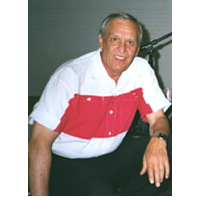
"Happy" Louie Dusseault

"Happy" Louie Dusseault

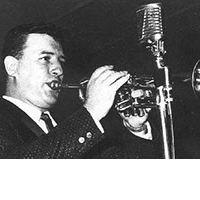
Happy Louie was born August 4, 1934 in Ware, Massachusetts.  His mother is Polish and living.  His father was French, and is deceased. At the age of nine, he played his first note on a Bugle and then changed to a B-flat Trumpet and has kept it up ever since.  Happy Louie attended the eight grades of St. Mary's Polish Grammar School in Ware, where he was taught to write and speak the Polish language.  In fact, his dad, for being French, living among Polish people, had a beautiful Polish vocabulary.

View Profile

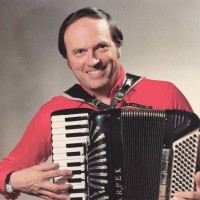
"Jersey Polka" Richie Drongoski

"Jersey Polka" Richie Drongoski

Richard Drongoski was born in Clifton, New Jersey to John and Val Drongoski in 1958. He does have an older sister and brother. Richard's sister lives in Florida near Richard and his parents. His one brother still remains in the state of New Jersey. At the young age of three the Drongoski's knew that Richard would lead a life centered around polka music. At this very young age Richard wanted and did receive an accordion. He always loved it when his father played the accordion and his grandmother sang songs in Polish. A little later in life his mother taught him to read Polish.

View Profile

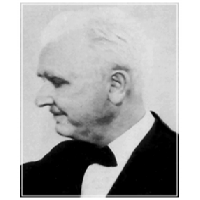
"Jolly" Jack Robel

"Jolly" Jack Robel

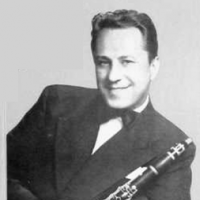
John Michael Robel was born in Austria February 14, 1903.  His parents, John and Mary, were Austrian immigrants of Slovak descent, who settled in Bethlehem, Pennsylvania.  He took his first music lessons on a clarinet from Tommy Dorsey, Sr.  Later, John played with Jimmy and Tommy Dorsey in the Elmore Band. The nickname "Jolly Jack" was unwittingly spawned on the bandstand by Tommy Dorsey when Tommy engaged in a friendly scuffle with Robel and almost shoved Robel's clarinet down his throat.  Instead of blasting him, Jack laughed it off.  "What a jolly fellow Jack is", TD remarked ... and it's been Jolly Jack ever since.

View Profile

"Jolly" Joe Timmer

"Jolly" Joe Timmer

Jolly Joe Timmer of of Bethlehem, Pennsylvania, has a radio show, television show, polka band, music store and picnic grove all strongly promoting polka music.  When asked when and how he became involved in polka music Joe said, "My time started after high school, 1948."

View Profile

"Whoopee" John Wilfahrt

"Whoopee" John Wilfahrt

John Anthony Wilfahrt, better known as "Whoopee John" Wilfahrt, was born in 1893 on a farm near New Ulm, Minnesota.  His grandparents, Joseph Wilfahrt and Franzeska Hauser, migrated to America in March, 1867, with three of their children and settled on  a farm in Sigel Township, a few miles from New Ulm. The family came from the small village of Swarzach located in the Bohemian Forest of western Bohemia., then part of Austria. Whoopee's father was born in 1871 in Sigel, eventually marrying Barbara Portner, whose family also originated in the Böhmerwald, for whom Whoopee named his well known "Barbara Polka." It was his mother who taught him the folksong that later became his famous theme song, the "Mariechen Waltz."

View Profile

Adam Barthalt

Adam Barthalt

Adam Barthalt was born in Ridgewood, Queens, NY on June 11, 1935. Adams's deep-rooted interest in music began unpretentiously at the age of three with a toy accordion he received from his grandparents while on a visit with his mother to Europe. By the time Adam was seven, he had graduated to the "real thing" and began his formal musical education. At the age of twelve he earned his first pay, which was $5, when he performed with a local band. At the age of ten he heard a recording by Frankie Yankovic which inspired him to go into the polka field. At the age of 16, he formed his own polka band, which had a series of constant engagements at leading resorts in the Catskill area.

View Profile

Adam Nowicki

Adam Nowicki

Adam Nowicki, born on February 6, 1921 in Conshohocken, PA was the oldest of five children. During the Depression the family moved to Trenton, NJ in 1926 with the hopes of finding work. As a student and parishioner of Holy Cross Church, he developed an early love for polish music and Polish radio programs. His father was the first clarinet player in the International Concert Band in Conshohocken, so there was always a clarinet around the house.

View Profile

Adolph Lesser

Adolph Lesser

Adolph Lesser's colorful career as a musician and entertainer spanned some sixty-five years before his stroke in 1996.  Adolph remains one of the most prominent musical figures in the Rocky Mountain region and is affectionately known as the "Old Master".

View Profile

Al Grebnick

Al Grebnick

It was a long hard haul for Al Grebnick, Nebraska Polka King, (1978), who grew up in the "dirty thirties," on a farm. With only an eighth grade education behind him, because the family could neither afford to board him out or buy him a car so that he could gain a high school education, Grebnick turned to music.  His first instrument, a Stradivarius given to him by an uncle when he was 10 years old.

View Profile

Al Piatkowski

Al Piatkowski

Polka music has been a part of Al Piatkowski's life as long as he could remember.  Born in Syracuse, NY on January 17, 1959, Al grew up listening to the Sunday polka programs.  His parents, Mike and Gloria, would attend the local polka dances and bring home the latest recordings of the bands they had just seen, giving Al more music to listen to during the week.  At the age of 7, he started what would become a 10-year run of accordion lessons from one of Syracuse's finest teachers, Ed Levandowski.  After practicing his lesson, Al would put on one of the polka records and play along with the band.  It wasn't too long before Al went to his first dance to see Li'l Wally, where he seemed to be more interested in watching the band than dancing.

View Profile

Al Soyka

Al Soyka

Al Soyka was born May 6, 1922 in Rockville, Connecticut.  At the early age of thirteen the Soyka Trio was formed with Al on the accordion, brother Ray on vocals and cousin Ed on the violin.  The group entered a local talent show and won first prize, which was a trip to radio stations in Boston, Massachusetts.

View Profile

Alex Meixner

Alex Meixner

Alex Meixner is a nationally acclaimed musician, performer, bandleader, educator and a leading advocate of polka music. Formally trained in classical, jazz and ethnic music, Alex has cross-pollinated his versatile playing styles through pop music, funk, jazz and polka. He is an active ambassador for polka music, revitalizing interest coast to coast resulting in sold out shows, renewed cultural interest, and growing mainstream acceptance. For Alex, it's more than playing energetic shows; it is a mission to provide a much needed positive experience that pulls communities together to celebrate history, culture and genuinely good times.

View Profile

Alfred Vrazel

Alfred Vrazel

Alfred Vrazel was born to parents of Moravian descent on September 6, 1940 on their family farm near Cameron, Texas.  His interest in music started early in life.  At the age of 10 he persuaded his parents into buying him a 2-row Hohner button accordion.  Three years later and after a lot of practice, Alfred, along with his brother Anton, and their three cousins, started a band they named "Vrazels' Playboys" later becoming, as it would be known for the next 50+ years, "Vrazels' Polka Band."  The band began playing at small events around the Central Texas area receiving no regular salary but small monetary donations from appreciative listeners and dancers.

View Profile

Alvin Sajewski

Alvin Sajewski

When it comes to polka music the name of Sajewski is a household word, representing an association of over 80 years in the annals of Polish and polka music in America.  Alvin Sajewski carried on the tradition established by his father, who opened their first music store in 1897 in Chicago.  In those early years the inventory included theatrical books, sheet music, instruments, piano rolls and recordings.  In time the store was flourishing and the related mail-order business he established had reached the farthest corners of rural and urban America.

View Profile

Andy "Day" Dziagwa

Andy "Day" Dziagwa

Fifty years is a long time. During that time span Andy has entertained polka fans throughout the United States with a distinctive style of musical talent all his own. Andy "Day" Dziagwa started his polka career in 1942 at the age of fourteen. He started to perform on trumpet with the late Joe Durlak Orchestra, the band also made several recordings on Rondo Records. During this time he and the band would perform every Wednesday evening on Chicago radio station WGES. The Durlak Orchestra was one of the most popular bands in Chicago during that era. Performing at least six times a week. In 1948, he left the band to join up with a group that was gaining popularity nation wide. The Eddie Zima polka band is synonymous with great Chicago style polka music and it was indeed a thrill for Andy to begin to perform with this group.

View Profile

Andy Fenus

Andy Fenus

Andrew (Andy) Fenus, along with his brother Steve Fenus, organized The Trel Tones polka band in 1954.  Since that time the band has performed at venues across the United States and Canada and appeared on numerous radio and TV shows in Ohio and Pennsylvania, including a three-hour special about polka music on Public Television.  The Trel-Tones recorded six albums on such renowned record labels as Bel-Aire of Chicago, IL, WRS of Cleveland, OH, and WAM of Youngstown, OH.  In 1981 their "Polka Encounters of the Honky Kind" recording won the United States Polka Association's Album of the Year and in 1984 their "Going Downtown" polka won the USPA's Song of the Year. 

View Profile

Anthony Zebrowski

Anthony Zebrowski

Anthony W. Zebrowski was born June 12, 1925 in Bayonne, NJ. When he was 2 he and his family returned to their homeland, Bialystok Poland. He lived there for the next 20 years. On April 1, 1945 Anthony and Zofia (Zosia) were married. In 1947 Anthony boarded a ship bound for the USA. He left behind his first child Sophie and his wife Zosia, who unknown to them at the time, was pregnant with their second child Anthony. As he left, he vowed to send for them. He would never return to Poland. While sailing, he subsidized the cost of his passage by performing music during Catholic Masses. Thus began his career in music and entertainment.

View Profile

Antionette Blazonczyk

Antionette Blazonczyk

Antonina "Antoinette" Blazonczyk was born and raised in the southern mountainous part of Poland in a village called Chocholow.  Also known as "Gazdzina z Chocholowa" - Antoinette was a "goralka" and extremely proud of her Polish Heritage. Antonina "Antoinette" Blazonczyk was born and raised in the southern mountainous part of Poland in a village called Chocholow.  Also known as "Gazdzina z Chocholowa" - Antoinette was a "goralka" and extremely proud of her Polish Heritage. Back in the 1940's Antoinette Blazonczyk recorded four 78 rpm records as a vocalist featuring authentic "goralska" music on the Podhalan Record label.  In 1948 she had purchased the Pulaski Village located at 17th & South Ashland Avenue.  It was here where Antoinette began promoting and strictly enforcing polka music exclusively.  Music, dancing, and polka lovers filled Pulaski Village five days a week.

View Profile

Bernie Goydish

Bernie Goydish

Bernie Goydish has been an active member of the polka community for more than 28 years.  He is a musician, bandleader, promoter, record manufacturer, distributor, and polka disc jockey.  He introduced more young new polka bands to the field than anyone else.  His Sunday polka radio show is the longest running in New Jersey, 18 years.  He has unselfishly donated thousands of hours to polka oriented charitable functions and organizations.  Through the use of his polka radio show, he has helped raise over $100,000 for the Heart Association, the Cancer Society, and has aided many organizations as well as individuals.

View Profile

Bernie Witkowski

Bernie Witkowski

Bernie Witkowski - Bernie Wyte - was born in New York, a fourth generation of clarinet players.  His talent didn't stop with playing the clarinet; he also plays sax, accordion, flute, drums and organ, writes the words and music to songs, introduces new dances and finds time to conduct a successful radio show.  He studied music at New York University where he received an M.A. degree.

View Profile

Bill Czerniak

Bill Czerniak

Bill Czerniak was born on June 20th, 1946, to Martha and Joe Czerniak--Joe is a 1989 inductee to the Polka Hall of Fame--of Duluth, Minnesota. At the age of six, Bill began taking concertina lessons from his father. Within a couple of years, Bill was making appearances with his dad and brother at local talent shows, wedding receptions, and parties. In addition, Bill and his younger brother Greg, made numerous appearances on a local Polka television show. By age twelve, he had joined his dad's band, "The Polka Dots", performing throughout the Midwest.

View Profile

Bill Czupta

Bill Czupta

Bill Czupta was an acclaimed musician and formidable accordionist. He learned to play the accordion at an early age, and became a member of the group known as Bobby Sawicki and the New Englanders. Bill resided in Massachusetts, and in 1970 he joined The Golden Brass, which soon became a much-sought-after national polka band. He excelled at playing the accordion to the extent that many polka fans described him as having "walking fingers." Bill produced most of the music and arrangements with the Golden Brass. He composed such songs as "Let The Sunshine In," "Broken Heart Polka," "Around The Stove Polka" and arranged "San Antonio Rose" and "ala Danny Davis and the Natural Brass." Bill Czupta is credited with producing the lively and dynamic sounds of the Golden Brass.

View Profile

Bill Shibilski

Bill Shibilski

Bill's radio career started in 1963 when involved with supporting a Rock n Roll radio show at Fordham U in NYC. He quickly got the radio bug and was invited by the Jesuit priest and station director, Father Trivett, to host a Polka show starting on November 28, 1964, on a low power college radio station. Shortly after that, he was the first to participate in a fundraising effort that raised the wattage to 50,000 and the first stereo polka show in the nation. Broadcast stations all over the United States took notice and contacted them for information and instruction to follow the idea.

View Profile

Billy Belina

Billy Belina

Billy Belina has spent a major part of his life playing and promoting polka music. Born in New Bedford, Massachusetts in 1947, Billy has his parents to thank for much of his success in the polka industry. In his early years, Billy often joined his parents on the two-hour drive to Connecticut to watch the local polka bands. He endeared himself to accordion greats such as Ray Henry and Al Soyka and soon desired to try the instrument on his own. At the age of eight, Billy convinced his parents to buy him his first accordion and sign him up for lessons. By his mid-teens, Billy's practice and dedication began to pay off as he started a band of his own, known as the BelAirs.

View Profile

Bob Earl, Sr.

Bob Earl, Sr.

Bandleader of The Imperials of Toledo, Drummer, Vocalist, Emcee, Polka Promoter, founder of The International Music Association Bob was born on Aug 21, 1930 to a Polish mother and English father. Bob grew up in a Polish neighborhood in Toledo ,Ohio. In 1951 Bob married wife, Mary and had 3 children, Jim, Bob Jr and Mary. Bob founded Earl Bros. Transmission and Auto Repair Centers and quickly trained his sons to take over the business so he could spend more time with his real life's passion, traveling with his polka band.

View Profile

Bruce Kryger

Bruce Kryger

Bruce Kryger has been playing with his own band since 1954.  In 1962 he joined with his brother Lucian and formed what became known as the Kryger Brothers Band.  Bruce played the cordovox accordion and composed many of the arrangements for the band.  The band had several hit recordings including "The Bridal Dance," "The Boys from Wilkes-Barre" and "Mary on a Bike."

View Profile

Bruno "Junior" Zielinski

Bruno "Junior" Zielinski

Born in Jaslo, Poland in 1911, Bruno Z. Zielinski came to this country with his mother, Anna, as a one- year-old boy.  They joined his father Zygmunt, who had earlier settled in Chicago's neighborhood of Bridgeport.  After elementary education at St. Barbara Parish Catholic School, he attended Harrison High School graduating in 1926.

View Profile

Bruno Mikos

Bruno Mikos

Bruno's singing career began early.  He learned to sing the "Two Bucks Polka" at the age of five as he heard the song played on the Oskierko Polka Show over WJOB Radio in Hammond, Indiana. During his grammar schools days he tried to play the accordion.  He did not care for this instrument and his interest switched to the trumpet.  He attended the Roseland Conservatory of Music and got instruction from a private teacher, Al Schonecker.  During the high school days, he played the trumpet and herald trumpet with the Jazz, Concert, Dance and Marching Bands.

View Profile

Brunon Kryger

Brunon Kryger

Brunon Kryger was born in Lodz, Poland in 1899.  From early childhood his ambition was to be an entertainer.  The outbreak of W.W.I. dampened his career for a short time for he had to serve 3 years and 4 months in the Polish Army.  After his discharge he studied at the Poznan Conservatory of Music, and upon completion of his studies in 1923 he toured Poland with leading musical shows as on entertainer and M.C., becoming another Rudy Valle so to speak.

View Profile

Carl Finch

Carl Finch

arl Finch was born in Texarkana, Tx on November 29, 1951. He began performing at the early age of 4 years old by singing in church choirs and later spent his high school years forming and playing in rock bands in northeast Texas. Carl minored in music at the University of North Texas and formed Brave Combo in Denton, TX in 1979. This began a 35-year legacy of playing original and innovative arrangements of music that incorporated diverse dance styles including polka, Latin American, and Caribbean. The band was nominated for Grammy awards seven times, winning twice in 1999 and 2004, and had its music featured in various movies and television programs. An animated version of Brave Combo was even featured in an episode of the acclaimed tv series, the Simpsons. A renowned guitarist, keyboardist, accordionist, vocalist, recording artist, record producer, and bandleader, Carl Finch has enjoyed a remarkable musical career.

View Profile

Carl Rohwetter

Carl Rohwetter

Carl Rohwetter was born March 1, 1930, the son of John and Elizabeth Rohwetter in Marion Township, County of Saginaw, Michigan. His father played the button accordion, as so many did in the farming area. Carl along with his brothers, John and Francis were always entertained with Polka Music. Carl's love of Polka Music started as a very young child.

View Profile

Casey Siewierski

Casey Siewierski

Casey was born in Chicago, Illinois on February 25, 1921.  At the age of seven, he began concertina lessons whenever he had money.  At the age of eleven, Casey played his first wedding, along with his father and brothers, Eddie and John, who were also musicians.  When Casey's father retired, the "Siewierski Brothers" continued without him.  The Siewierski Brothers proved to be very versatile, each of them switching instruments during a performance.  During the Depression Era, they started Polka music on Division Street, which later became known as "Polish Broadway".

View Profile

Charlie Hicks

Charlie Hicks

Charlie Hicks is a pioneer in the polka field from the Philadelphia, Pennsylvania area.  At eighteen years of age, he already displayed his musical talent by playing accordion.  In 1930 he formed a small dance band.  In 1937 he made his first recording for RCA Victor.  He then joined the staff of radio station WREN in Philadelphia and provided music for their Polish, Italian, Jewish and American radio shows.  When the Major Bowes Hour was popular on radio back in 1940, Charlie Hicks auditioned and came out a winner.  Because of this contest, Charlie signed a contract to travel and play all over the U.S.  After this tour he organized a 16-piece band and played many campus jobs, hotels and night clubs.  He recorded Six albums on his own label, Goodwill Records.

View Profile

Chester "Chet" Zablocki

Chester "Chet" Zablocki

"Still going strong after 47 years," best describes Chet Zablocki. His "Polish Festival" radio program is still in the same time slot on WTOD - 8:30 a.m. until 12:00 noon. In the late '50s and early '60s the show was heard seven days a week, and later changed to Sunday mornings.

View Profile

Chester Budny

Chester Budny

Born on May 20, 1921 in the "Old Polish" Fleet Avenue neighborhood of Cleveland, OH, Chester Budny became one of the city's great southside musicians of the 1940s and 1950s. At the young age of 4, he displayed a keen interest in music and was given a violin at age 6. Later at the age of 12, Chester bought himself a drum. Since the young artist loved to sing while he played he be-came known as "The Singing Drummer." He performed in the St. Stanislaus marching band and later played drums in the U.S Army.

View Profile

Chester Pala

Chester Pala

Chester Pala started off his musical career in 1958 with accordion lessons at the Monarch School of Music in Hammond, Indiana. Here, Chester acquired keen musical knowledge and developed many music abilities which enabled him to excel quickly with playing the accordion. It was at this point where Chester Pala started going down the road to become a Professional Musician.

View Profile

Chet Dragon

Chet Dragon

At the age of 12 Chet had a couple of neighbors that were musicians one played the clarinet, the other the accordion. Chet knew that if he purchased a trumpet he would be asked to join them. Chet's family couldn't afford to just purchase one for him outright, so he worked on a farm for two weeks which netted him $10 which was just enough to purchase that trumpet. Now he needed to take lessons, which were 75 cents. His family was often on a tight budget--and how many weren't--so after the necessities were taken care of, many of us didn't have too many 75 cents left over."

View Profile

Chet Gulinski

Chet Gulinski

The First Chet Gulinski Show was broadcast at 7:30 p.m., Sunday, November 5, 1955. Since that time, many thousand Chet Gulinski Shows were broadcast. Approaching its 43rd anniversary, The Chet Gulinski Show was broadcast Sundays at 9:30 a.m. and at 11 a.m. over WNDZ (750AM), a 5,000-watt station that can be heard in Chicago, all its suburbs, and large cities like Kenosha, Racine, Milwaukee, Rockford, South Bend, covering an area of approximately 200 miles from Chicago. The broadcast could be listened to in parts of Illinois, Indiana, Michigan, Wisconsin and Iowa. In past years, The Chet Gulinski Show has been aired over many radio stations - WOPA, WOPA-FM, WTAQ, WBMX, WEAW, WYLO, WREN, WIVS, WAIT, WONX, WPNA, WVVX and WNDZ.

View Profile

Chet Kowalkowski

Chet Kowalkowski

Destined to be a prominent figure in the polka circuit, Chet Kowalkowski began his musical career with the accordion at the age of eight. At twelve, he already won his first merit of achievement for the accordion on the John Nieminski WOPA Polka Show. After entering high school, he became fascinated with the trumpet. His expert ability with this instrument earned him the first chair in the school's concert band and shortly after that the position of staff sergeant.

View Profile

Chet Schafer

Chet Schafer

The polka career of Chet Schafer began in 1950, when, together with Li'l Wally Jagiello, their voices were heard on a half-hour polka program on radio station WCRW in Chicago.  But things didn't roll for Chet until he started his own "Polka Hit Parade" program on station WTAQ, LaGrange, Illinois, in 1952.  On this program he spun the best selling polka records according to the surveys, getting the idea from the then popular television show "Your Hit Parade".  The request and dedication idea caught on and his Sunday morning program flooded with mail.

View Profile

Cliff Hermel

Cliff Hermel

Musician and ballroom owner  Cliff Hermel was born March 18, 1918 in Mankato, Minnesota.  He graduated from high school in 1934 and entered the wholesale business with his father A.H. Hermel.  He was on the road in that business for 17 years, all the while though being very active and well known as a drummer.  He worked with most territorial bands and started his own in 1945.  Cliff was best known for his unique and entertaining style of drumming including his trademark "marching cadence" between polkas and rudiments on woodblocks, rims and even walls.

View Profile

Craig Ebel

Craig Ebel

Craig Ebel has been involved in polka music all his life. Craig grew up in a musical family with his mother, LaVay, singing and playing guitar in country western bands and his father, Elhart, building and operating the Bel-Rae Ballroom in Mounds View, Minnesota, from 1964 to 1971. The Bel-Rae became one of the most popular dance spots in the country and the foundation of Craig's musical career. Craig has been playing drums professionally for over 35 years in all styles of music including rock, country, big band and polka. He has performed and traveled with America's Polka King Frank Yankovic, Canada's Polka King Walter Ostanek, Myron Floren of the Lawrence Welk Show, Dick Contino, The Mrozinski Brothers Aleatoric Ensemble, The Six Fat Dutchmen, Nashville's Joey Miskulin, Al & Alex Meixner, Karl & the Country Dutchmen, Frankie Kramer and countless more.

View Profile

Dan Gury

Dan Gury

June 21, 1951, Dan Gury was born in Dearborn MI. Dan has been exposed to music since the early age of five when playing and recording music on his parents reel to reel tape machine. Dan would listen to the hits of the 1950's from bands of Li'l Wally and Marion Lush. Dan would park himself by the jukebox in his dads bar and play 45's all day long. Dan started piano lessons at the age of six and would continue with piano lessons up until the age of eleven when he started accordion lessons. Dan would sing and write original songs but with "hokey lyrics" as he puts it.

View Profile

Dave "Scrubby" Seweryniak

Dave "Scrubby" Seweryniak

It's only fitting that Dave "Scrubby" Seweryniak would have been born on the Fourth of July — his performances are explosive, his antics, always power-packed. Growing up on the East Side of Buffalo, Scrubby was exposed to polka music at a very early age and began his musical career at age six, playing the accordion, first by ear, then with formal lessons. Later, in his early teens, after seeing Li'l Wally perform, he was in awe of Wally's performance, his vocals and concertina playing, and the Chicago-style of music he championed. At age sixteen, Scrubby started to play the concertina — his main instrument for the rest of his musical career.

View Profile

David "Nigel" Kurdziel

David "Nigel" Kurdziel

David "Nigel" Alan Kurdziel was born on May 2, 1963, in Buffalo, NY. He was first exposed to polka music at church picnics and from polka shows. Nigel's cousin, Gino Kurdziel, played for the renowned G Notes. His older brother Mike was a drummer, and his younger brother Kevin played accordion. Nigel started playing guitar at the age of 11 and joined his first band, The Melody Men, at age 12, playing bass with his brother on drums. In 1981, he graduated from the Buffalo Academy of Visual and Performing Arts, where he took music theory and performance classes, played coronet and piano, and auditioned to play upright bass with the orchestra. Nigel considers Vinny Horoschok, Vinnie Bozzarelli, Eddie Blazonczyk Sr, Stas Mikruit, and Joe Dudek to be among his polka music influences.

View Profile

David Zychowski

David Zychowski

David M. Zychowski was born on October 9, 1953, to John and Catherine Zychowski of Ambridge, PA. His parents met at a Frank Wojnarowski dance in 1949 and later exposed their children to the rise of polka greats such as Li'l Wally, Marion Lush, and Eddie Blazonczyk. It was a given that their two sons, Jan and David, would learn to play polka music.

View Profile

Dean Hansen

Dean Hansen

Dean Hansen was born in Ithaca, Ne in April of 1933 into a farming family of German ancestry. He was stricken with polio at the age of four and suffered paralysis of his right leg. Fearing his condition would prevent Dean from ever farming, his parents introduced him to music by buying him an accordion. After several surgeries, he was able to walk and take music lessons from various teachers including Fritz Poppe, who influenced Dean's distinctive style. He quickly developed his skills and went on to tour with the Herb Molter polka band in 1951, the Sparta Band in 1953, and the Eddie Janak band in 1958. In 1971, dean joined the Ernie Kucera band and recorded several albums.

View Profile

Dee Dee Ogrodny

Dee Dee Ogrodny

Dee-Dee Jasiewicz Ogrodny has had polkas in her heart since she was born, and she has been a fixture at polka events since she was 18 months old, first with her Mom, Josephine Jasiewicz, and with her Dad and brother, Henry and Henny Jasiewicz (both Inductees of the IPA Polka Music Hall of Fame). Dee-Dee started to sing with the Bell Hops' "Hopettes" and then solo with the Bell Hops when she was 9 years old, standing on a chair to reach the microphone.

View Profile

Dennis Polisky

Dennis Polisky

Dennis Polisky, leader, clarinet, tenor saxophone player for the Maestro's Men Orchestra from Colchester, Connecticut, has been performing and entertaining audiences for over 38 years. His dedication, versatility and personality has earned him the recognition as one of the best clarinet players in the polka field today. He credits his parents, Raymond and Helen Polisky with introducing him to polka music.

View Profile

Dick Pillar

Dick Pillar

Two words that are virtually synonymous to thousands of fans throughout the country are "polka" and "Pillar," like celery and salt they were made for each other.  Born 34 years ago to Joseph and Stella Pillar Pillar of Uncasville, Connecticut, Richard has been setting toes a-tapping since 1958 when he formed his first orchestra, performing at school dances, weddings, and private parties.  But fame arrived on supersonic wings and the band was soon on the road, appearing throughout New England, the Middle Atlantic States and the Midwest, as well as Canada and Florida. Educated at Norwich Free Academy in Norwich, Connecticut, and at Mitchell College in new London, he also attended the Hartt College of Music in Hartford. 

View Profile

Dick Rodgers

Dick Rodgers

The Dick Rodgers International TV Recording Orchestra was organized in 1945 when Dick formed a band comprised of high school students.  Within a few years the band was doing live radio broadcasts and made their first recording in Chicago.  From recordings and radio the next step in promoting the band was TV.  In 1955 the first live telecast was made over Station WLUK, Green Bay, Wisconsin.  The program was later expanded from a half hour to a full hour.  In 1969, because the TV. show was so successful and popular, other Stations in the Midwest carried the show.  The TV. show was taped at Danceland Ballroom, located 6 miles north-west of Green Bay on different Wednesday nights throughout the year with live dancers.  It is then broadcast on various TV stations in the Midwest on Sundays at noon.  In 1976 it was the 21st consecutive year the Dick Rodgers Show had been on TV.

View Profile

Don Cialkoszewski

Don Cialkoszewski

Donald Lee Cialkoszewski was born to John and Frances Cialkoszewski of Polish, Russian and German ancestry in Trilby, Ohio, a suburb of Toledo. Don's entire family was musically inclined, and at age seven, he asked his parents for a red accordion for his birthday.  He began formal accordion instruction at the Faust White Music Company and at eight years of age, he gave his first paid performance at a Christmas party.

View Profile

Don Gralak

Don Gralak

Donald R. Gralak was born on August 19, 1952, in Milwaukee, Wisconsin. His father bought him his first concertina at the age of six, and he was taught by local Milwaukee virtuoso Stan Nowicki. By the age of nine, he had performed publicly on radio and made several television appearances on WTMJ's "Joe Shot and the Hot Shots." Soon after, he was playing solo for parties, bridal showers, and small functions. In 1963, at the age of eleven, when Stan Nowicki became ill and unable to continue teaching, Don took over instructing Stan's students and taught the concertina for the next 18 years.

View Profile

Don Jodlowski

Don Jodlowski

Don Jodlowski was born on August 30, 1940 into a musical family that lived on the southwest side of Chicago, il. His family's love for polka music inspired him to take drum lessons at a young age. Don developed his skills so that by the 1960's he was drumming with bands that included Joe "Pat" Paterek, Johnny Bomba, Li'l Richard Towalski, Li'l wally Jagiello, the Ampol Aires, and Frankie Yankovic. He was the regular drummer for the Polkaliers, who recorded an album on Marion Lush's Dyno label, and the leader of the Vibrasounds, who recorded Polka Magic on Eddie Blazonczyk's Bel-aire label.

View Profile

Don Lucki

Don Lucki

Don Lucki was born July 18, 1933 to Michael and Janet Lucki.  Don's polka career started as a teenager with the original Li'l Wally Orchestra.  The ensemble consisted of Li'l Wally on the drums & vocals, Eddie Noga on clarinet & alto sax, Casey Siewierski on concertina & Don Lucki on trumpet.  They were playing in excess of 300 dates per year.

View Profile

Don Peachey

Don Peachey

Don Peachey hails from Burnett, Wisconsin, a small town located an hour from Milwaukee. He began playing the accordion at the age of 14. Don made his first paying performance at the civic center in Fairwater, Wisconsin. Except for two years in the U.S. Army, he has been keeping dancers happy with his music ever since.

View Profile

Dr. William Lausche

Dr. William Lausche

A dentist by profession, Dr. Lausche was active for nearly sixty years in the music field. Dr. Lausche was a brilliant composer and arranger; played the piano proficiently; produced and directed recordings on national labels; taught and rehearsed some of the most famous Cleveland style polka artists; coached singing groups; and was active outside of purely ethnic circles in Cleveland's cultural community.

View Profile

Earl "Cousin Fuzzy" McNellis

Earl "Cousin Fuzzy" McNellis

Born Earl McNellis, on a farm in Millville, Minnesota, he attended schools at Hyde Park, Millville, and Lake City.  He was a pioneer in television musical programs, starting out in the 1940's with a vaudeville group known as Uncle Louie and the Town Hall Players.  When Uncle Louie left, McNellis took over with parts written around the country bumpkin character, Cousin Fuzzy.

View Profile

Eddie Biegaj

Eddie Biegaj

Eddie was born in Toledo, Ohio to a musical family.  Mother Gina is a trained clarinetist and vocalist while father, Dionysius "Danny" Biegaj played trumpet and sang.  With the help of "Busia" Helen (his maternal grandmother) at a young age Eddie started his love for polka and Polish culture and heritage by singing along to the 78 RPMs and 45's of such greats as Frank Wojnarowski, the "Connecticut Twins" and "The Naturals".  He started formal training on drums in 2nd grade.

View Profile

Eddie Blazonczyk

Eddie Blazonczyk

Eddie Blazonczyk was a native Chicagoan, son of Fred and Antoinette Blazonczyk, who for years operated the Pulaski Village Ballroom and later the Club Antoinette in Chicago. Eddie started playing polkas in the early fifties with a four-piece combo known as "Happy Eddie and his Polka Jesters." They performed at many Polish weddings, anniversaries and other engagements in Chicagoland.

View Profile

Eddie Forman

Eddie Forman

Eddie Forman, musician, educator, composer, arranger and polka band leader of the Eddie Forman Orchestra, known to many as EFO, has been promoting polka music since 1968. Eddie was born on June 3, 1953 in Hadley, Massachusetts, His parents, both of Polish descent, exposed him to polka music at an early age. They were strong believers in keeping the Polish traditions and Polish music alive in the family. As a young boy, Eddie was inspired to play the accordion by watching Myron Floren on the Lawrence Welk show. At the age of 5, when he began taking accordion lessons from two local accordionists his accordion was bigger than he was.

View Profile

Eddie Habat

Eddie Habat

Eddie Habat was born in Cleveland, Ohio on September 16, 1926, the youngest child of John and Anna Habat. He had two brothers, John and Herman, and two sisters, Betty and Anna. When Eddie was eighteen months old, his mother was tragically killed in an auto accident. His father then returned to his homeland of Slovenia where he married Mary Cerar from Domzale, who came to Cleveland and raised the five Habat children. Eddie led one of the five outstanding Cleveland-based orchestras (the others being Yankovic, Pecon, Vadnal and Bass) that achieved national prominence recording and performing Cleveland-style Slovenian polkas and waltzes. The youngest of the five leaders, he utilized his Slovenian musical heritage and developed a personally unique orchestral style that enjoyed widespread appeal across the nation.

View Profile

Eddie Korosa

Eddie Korosa

Few can equal the contributions made by Eddie Korosa in popularizing polka music. Eddie has left his mark across the entertainment spectrum, inspiring new generations of polka lovers along the way. Eddie Korosa was born in the Southwest side of Chicago in 1918; a first generation American of Polish and Slovenian heritage, and 1 of 7 children. He attended St. Blaze's grade school in Summit, and Argo High School. His father, Joseph, an accordion player, purchased Eddie's first button-box accordion and taught him to play at the tender age of 8. With his first song, Over the Waves, Eddie's musical destiny was in sight.

View Profile

Eddie Oskierko

Eddie Oskierko

There can be little doubt about Eddie Oskierko being a pioneer in radio and in the early formative years of polka music.  The history of his career can be summarized in one word:  "determination."  When Ed started his radio career in October 1930, at station WJKS, he found that the Depression had set in and his efforts in obtaining sponsors at that time were not very productive.  For some time after that uncertain beginning, Eddie considered it lucky to be able to pay for the radio time or to earn for his efforts only a few paltry dollars.

View Profile

Eddie Siwiec

Eddie Siwiec

Eddie Siwiec began playing polka music in 1969 and continues to this day. He credits his parents, Chester and Catherine, and his uncle, Joe Smiell, renowned musician, composer and bandleader from Oakland, California, with introducing him to the wonderful world of music and dance. Edward is the youngest of four children and was born along with his twin sister on March 9, 1955, in Dearborn, Michigan, the hometown of Henry Ford, as he likes to say.

View Profile

Eddie Skinger

Eddie Skinger

The gifted Eddie Skinger has always been clear about his commitment to his vocation.  Over the past 62 years, he has become an accomplished and respected vocalist, musician, arranger and composer.  His talent and ability shine through his music and can easily be considered as one of the bright lights within the Polka Industry.

View Profile

Eddie Zavaski

Eddie Zavaski

Eddie Zavaski was born in January 31, 1924 in Rocky Hill, Connecticut, (8 miles South of Hartford) to Stanley & Pauline Zavaski.  While growing up as a child he was very much influenced by music.  Since he was first generation American born, his mother Pauline was instrumental in encouraging him to continue his Polish culture through the arts.  She encouraged him to take up an instrument too.  But, as a youngster, Eddie was an avid baseball player and as he grew so did his ability to the game.  He became so good in fact that Eddie played semi-professional baseball.  In March of 1943 he entered the armed service and represented his country in WWII.  He was honorably discharged in February of 1946.

View Profile

Eddie Zima

Eddie Zima

Eddie Zima was born in 1923 in Chicago and began playing the concertina when he was 6 years old.  His mother, Eleanor, upon noticing his eagerness and ability to play, signed him up for lessons.  The concertina was too big for the boy to carry, so he hauled it to lessons in his little red wagon.  He attended St. Helen's grammar school in Chicago's north side from which many polka musicians graduated.  He then went to Crane Hgh School.  His first jobs as a musician were among people in his neighborhood where he was called on to play at dances, picnics and weddings.

View Profile

Edward Guca

Edward Guca

Ed Guca was born on August 7, 1944 to a very musical Polish family in Toronto, Ontario, Canada. His uncle played clarinet in a popular wedding band and was of particular influence in Ed's love for Polka music. It was in his youth that Ed learned how to play the accordion from a teacher who showed him how to play from the heart.

View Profile

Edward Kutas, Sr.

Edward Kutas, Sr.

Edward Chester Kutas Sr. was a well-known and important promoter of polka music in Buffalo and Western New York.  He was the owner and operator of the historic Warsaw Inn on Broadway in the heart of the Polish East Side.  For many years, Ed had a vision for a polka convention to be conducted in Buffalo and urged his friend Johnny Hyzny of Chicago to bring his International Polka Convention to the Nickel City.  His dream was realized when in 1965, the largest polka organization of its time, conducted an unbelievably successful convention in Buffalo with over 8,000 people attending.  Ed was instrumental in proving a polka event and organization of national scale was possible.

View Profile

Ellsworth "Babe" Wagner

Ellsworth "Babe" Wagner

Ellsworth Wagner, nicknamed "Babe" in his early youth, was a native of New Ulm, Minnesota, the "Polka Capital of the Nation." He was born in Essig, Minnesota, on June 1, 1914. During his short life, music was his thing. His musical training began almost on the day he was born. His parents were accomplished musicians, and his maternal grandfather, who played the violin, assisted in giving him music lessons. Babe learned the piano, violin, saxophone, trombone, and drums. Trombone became his instrument of choice, and by the age of 10, he was an accomplished musician.

View Profile

Elmer Scheid

Elmer Scheid

Elmer Scheid was born on October 4, 1921 in New Ulm, MN.  At the young age of 8 years old, he learned to play the concertina from his father and performed his first professional dance event with the John Fritsche Band at the age of 14.  Elmer later played with the Six Fat Dutchmen and the Babe Wagner Band, which he managed from 1949 to 1951.  He then created his own band, Elmer Scheid and his Hoolerie Band, and is considered one of the pioneers of the "hoolerie" sound where a concertina and clarinet play together in higher registers reminiscent of the ländlers of Bavaria and Austria. 

View Profile

Emily Pinter

Emily Pinter

Emily Pinter began her music and dancing at the early age of five, studying piano, ballet and tap dancing.  At age 16, while dancing with the Alliance of Polish Clubs group, the dancing instructor took ill, and Emily was asked to take over the class.  The following year she was hired full-time, launching her on a career of dancing.  In 1948, Emily directed her first recital.  She continued with musical lessons on piano, accordion and clarinet at Northwestern University School of Music.

View Profile

Ernie Kucera

Ernie Kucera

With the unique sound of an accordion and the oom pah pah of the tuba, "Abie", Nebraska's Ernie Kucera and his band has been entertaining people with polka music for the past fifty years. Kucera first started playing drums in his brother's band, The Kucera Accordion Band in 1938. When war broke out many of the musicians were drafted, and Kucera reorganized the band in 1942. "Since the war took most of the musicians, I had to recruit high school kids to play in the band," he said. "And there are four of them still with me, Bernie Stanislav, Leonard Pittz, Leonard Vidlak and Irvin Cidlik."

View Profile

Fezz Fritsche

Fezz Fritsche

Born in 1908, Victor "Fezz" Fritsche started his own band in 1940.  He used seven men mostly, sometimes three or four.  In the early 50's, he had the "Fezz Fritsche Show" on KNUJ radio in New Ulm, Minnesota.  He called his orchestra the "Goosetown Band".  Fezz sprung out of Goosetown, the area that New Ulm sonamed because geese roamed free on the streets and yards in pioneer days.  He profited from his band and those long, sleepy rides through the night, home from dance halls in Wisconsin, Iowa, South Dakota, as well as Minnesota.  He was one of the best old-time band leaders in New Ulm, ranking with Harold Loeffelmacher, Babe Wagner and Whoopee John Wilfahrt. 

View Profile

Florian Chmielewski

Florian Chmielewski

Florian Chmielewski is the product of a family that has been synonymous with polka music for six generations. One of 15 children, he was born in Sturgeon Lake, MN on February 10, 1927. As he progressed from a dairy farmer, to County Commissioner, to Minnesota State Senator, Flo-rian always maintained his love for the accordi-on. At age 18, he received his first accordion in 1945 and began to lead a band. Florian's children later joined the band that went on to produce 40 albums. After performing with his brothers on his weekly radio shows, Florian also broadcasted the Chmielewski Funtime TV show for the next 35 years, seen nationwide.

View Profile

Frank Borzymowski

Frank Borzymowski

Music has always played an important part of Frank Borzymowski's life. His first professional gig was at the ripe old age of 14 and it wasn't long after that all of Baltimore's Polonia wanted to book Joe and Anita's boy for their functions. Frank's high school and college years were filled with great memories playing polkas at Baltimore's Polish Home, Blob's Park and all the many Polish parishes through-out the east side of the city.

View Profile

Frank Liszka

Frank Liszka

Polka music speaks to the soul of Frank Liszka like no other music. Since the early 1960s going to local dances, Frank discovered his lifelong ambition, to become a polka musician. Following the examples of his polka heroes, Marion Lush, Li'l Wally, and Eddie Blazonczyk, Sr., Frank set out to become an integral part of the development and the play of polka music as we know it today.

View Profile

Frank Wojnarowski

Frank Wojnarowski

Frank Wojnarowski, a resident of Fairfield, Connecticut, was born in Sanok, Poland. He started the Frank Wojnarowski Orchestra thirty years ago; his instrument was the violin. His sister Eleanore was the original vocalist in the band. Their first break, a recording session with Dana Records, came in 1947 - "Bije Mamcia" was their first record.

View Profile

Frankie "Gee" Grybosh

Frankie "Gee" Grybosh

Frank Grybosh had been a polka musician for 18 years and led a 6-piece orchestra under the name of "Frankie Gee" before he was tragically killed on January 1, 1970. Frank Grybosh was born in Ludlow, Massachusetts on October 9, 1936, and was the only child of Wanda (Topor) and Frank C. Grybosh.  At a young age, he started playing the accordion and had an avid interest in polka music.  He started his first band, The Rhythm Knights, at the age of 18.  The members of this band were:  Frank Grybosh, Bob Nowak, Stan Warzecha, Richard Snieczyk and Sonny Dvorchak. This group of young men primarily played for weddings, showers, and other local engagements

View Profile

Frankie Yankovic

Frankie Yankovic

Both Andy Yankovic and Rose Mele came to America in 1903 from the Republic of Slovenia. However, neither knew the other in the old country. They first met in a lumber camp in Davis, West Virginia, where many Slovenes worked. Married in 1910, they had three daughters: Josephine, Rose and Mary. In 1915, Frankie, their only son was born. Eventually, Yankovic moved to Cleveland, Ohio.

View Profile

Fred Bulinski

Fred Bulinski

Having been raised in an ethnic community in Niagara Falls, New York undoubtedly had something to do with Freddie Bulinski's early exposure to and fascination with Polka music. He was born February 5, 1947 to Fred and Martha Bulinski, the eldest of three children. His sister, Suzanne is administrative head of the Emergency Department at Rochester General Hospital; and his brother Dan is a Colonel in the U.S. Army, serving as the Professor of Military Science at William & Mary College. Freddie attended St. Stanislaus Kostka parochial school followed by Bishop Duffy High School and graduated from Niagara University with a degree in Russian History.

View Profile

Fred Hudy

Fred Hudy

Fred Hudy's introduction to music was at the age of 10 when a representative of the Midwest Accordion School visited SS. Peter and Paul School on Chicago's Southwest side. Practicing daily, he soon joined his first polka band with Richie Gomulka and Louie Jedlowski called "Little Louie and the Lucky Boys." At the age of twelve he and this band took second place on the then famous Morris B. Sachs amateur hour. The band also made an appearance on WGN-TV in Chicago during a broadcast of the "Ron Terry Polka Party."

View Profile

Fred Ziwich

Fred Ziwich

Fred Ziwich was born in Cleveland, Ohio on March 10, 1954.  He began taking accordion lessons at the age of 5, and could read music before he could read English.  Fred started taking clarinet lessons in the 4th grade, began playing the tenor sax in the 8th grade, and learned to play the button box by his senior year in high school.  Upon his graduation from Indiana University in 1977, he formed Fred Ziwich and his International Sound Machine (ISM).

View Profile

Freddy "K" Kendzierski

Freddy "K" Kendzierski

Freddy "K" Kendzierski has been a fixture in the polka scene for over thirty-five years. He was born in the Bronx, New York, which was then a mecca for polka music with greats like Bernie Witkowski and Regina Kujawa. At the age of seven, Fred decided he wanted to play the accordion and started taking lessons from Bernie Witkowski's cousin Walter. In the early 1960's, when the neighbors started to move out of the city, Fred's family moved to South Plainfield, New Jersey, but Fred still was making the trip into the city for his lessons. He started his first band at the age of 15 with his neighbor Rich Sobizenski who was then 21. He needed Rich to get him into the bars to book his band, since he wasn't old enough to get in on his own. Rich would have the managers come out to talk to Fred in order to get the booking.

View Profile

Gary Brueggen

Gary Brueggen

Gary Brueggen was born in the small farming community of Cashton, Wi, where at the young age of two he became captivated by polka music he heard on the radio. Recognizing his potential, Gary's parents bought him his first set of drums at five years old, and by the time he was nine, he played his first job with the Ridgeland Dutchmen

View Profile

Gary Rhamy

Gary Rhamy

Engineer, producer. announcer and owner of Peppermint Productions, Gary Rhamy has engineered four Grammy winning albums. He has produced over 500 albums for more than 175 polka artists alone. While at Ohio University where Gary (seated at right) received his Bachelor of Fine Arts degree in broadcasting he produced a live jazz program called "Campus Jazz" which aired weekly on WLW Radio in Cincinnati. After college, Gary went to Youngstown in 1967 to work for WBBW Radio as well as for United Auto Recording as an engineer. Following two years as a producer-director for the US Army's Television Division at Fort Knox, Kentucky, he received the distinctive "Hell on Reels" award for outstanding service and returned to Youngstown in 1970 to form Peppermint Recording Studios.

View Profile

Gary Seibert

Gary Seibert

Gary Seibert, originally from Cleveland, Ohio, started playing the accordion at the age of 8. By the age of 12 he started his own two-piece band, resulting in over 60 years of musicianship. Throughout his school, Gary would play at the local canteen, parties, and of course, local Friday fish fries. Shortly after high school, Gary enlisted in the Navy where he used his musical talent to entertain the troops whenever the opportunity arose.

View Profile

Gene Swick

Gene Swick

On October 16, 2021, the polka world lost one of the most respected and loved polka promoters in the industry. Eugene (Gene) Swick passed away just two days after his 90th birthday after a long bout with multiple health issues. Born in the Polish neighborhood of Greenpoint in Brooklyn, NY, he went on to serve his country in the Air Force as a nuclear physicist. After 20 years of service, Gene retired as a lieutenant colonel and began another phase of his career as a senior staff scientist for the Science Applications International Corporation (SAIC). For the next 30 years, he would make frequent technical presentations to top Department of Defense officials at the Pentagon in Washington, DC. His family life included raising seven children, four girls and three boys, who gave him two grandchildren.

View Profile

Gene Wisniewski

Gene Wisniewski

Gene Wisniewski, was the son of Polish immigrants who settled in Connecticut where his dad, a tailor, worked in the weaving Mills in Manchester.  At the age of 15, with three months of instruction on the accordion, he played his first jobs at weddings and taverns with his two brothers on banjo and sax.  From then it developed into a nine-piece orchestra.  This new career was interrupted by World War II when he had to serve a hitch for Uncle Sam as a B-24 pilot.  Upon his discharge in 1945, Gene started teaching accordion.  He opened a music studio and record store in Hartford, Connecticut.  It was through this store that Gene became acquainted with Walter Dana of Dana Records.

View Profile

Hank Haller

Hank Haller

Hank Haller of Westlake, Ohio, is a musician, vocalist, bandleader, deejay, has made numerous recordings and leads a traveling band. Mention Hank Haller and visions of oompah music and "lederhosen" [short leather pants], come to mind.  But Haller is more.  He is a very prolific recording artist in the polka field with seventy albums and three videos to his credit, with over one quarter of a mullion albums sold.

View Profile

Harold Loeffelmacher

Harold Loeffelmacher

Harold Loeffelmacher was born in 1905 on a farm in Nicollet county near Fort Ridgely of frontier days.  He moved to New Ulm, with his parents, Mr. and Mrs. John Loeffelmacher.  He took his first music lesson on a violin from a Lutheran minister.  He graduated from the violin to wind when he bought a mail order horn and was taught by  A. P. Boock of New Ulm.  He played in the 205th infantry band when Boock was director.

View Profile

Henry "Hank" Guzevich

Henry "Hank" Guzevich

Back in California, where Hank was born, there was a family that played Mexican music called "Los Taconazos." About 1970, Gus Guzevich, who was Hank's father, realized that all of his kids adapted very easily to singing and playing music. Their style was different than everyone else, maybe because when they were kids they listened to all kinds of music, Mexican, Polish, jazz, classical and rock.

View Profile

Henry "Henny" Jasiewicz

Henry "Henny" Jasiewicz

Henry David (Henny) Jasiewicz was born in McKeesport, Pennsylvania, on May 22, 1945. He has performed professionally since he was nine years old and started his polka career playing trumpet for Leo Gibala & The Bell Hops. Henny performed with this group for several years. In 1979 he started his own band known as Henny & The Versa Js, which is in its 39th year and has performed locally, nationally and in Poland.

View Profile

Henry "Will" Wilczynski

Henry "Will" Wilczynski

Henry "Will" Wilczynski has dedicated 53 years to music as an arranger, composer, teacher and musician. He has written and arranged for some of the greatest polka bands and shows of all time including: Jimmy Sturr (Jimmy's 10 Grammy award recordings and Christmas shows), Myron Floren, Walt Solek, Dick Pillar, Ray Budzilek, Eddie Skinger, Ray Henry, Connecticut Twins, Rich Bobinski, Johnny Dyno, Mike Piorek, Polonaise Dancers, John Przasnyski and more.

View Profile

Henry Jasiewicz

Henry Jasiewicz

By age 12, Henry Jasiewicz discovered his love for music and was practicing with a muted trumpet in his basement, often while his parents were sleeping.  In the years that followed, he also spent as much time as possible learning the violin.  His musical career began in the 1930's.  In 1935 he helped organize the Polish Ambassadors Orchestra.  It was at this time that he DJ'd a weekly radio broadcast over WHJB radio in Greensburg, Pennsylvania.  He then joined the Silver Moon Orchestra and that musical friendship continued for 25 years.  At that time he also played with the Sunset Orchestra and the Polish Diplomats.

View Profile

Henry Mocarski

Henry Mocarski

While still in his early teens, Henry Mocarski, of Windsor, Connecticut started a polka band with Emil Juda on drums, Ray Zak on sax, and Henry Mocarski on accordion.  Using the first names of Ray Zak and Henry Mocarski, the Ray Henry Orchestra was born.  This group played in a local restaurant for approximately 2 ½ years with much of their earnings used to build up their polka library.  Then they made plans to have a 10-piece orchestra.  Running ads in local newspapers, all positions were soon filled and rehearsals begun.  Hired to play a wedding, the exposure brought immediate response.  They soon found themselves performing in many polka dancing spots in the Connecticut area.

View Profile

Ignacy Podgorski

Ignacy Podgorski

Ignacy Podgorski was a musician, composer, arranger, publisher, recording artist and violinist who conducted his own orchestra.  He was born on February 1, 1886 in Kielce, Poland.  As a boy he lived in Czestochowa where he obtained his musical education and acquired a love for native folk-lore.

View Profile

Jackie Libera

Jackie Libera

Jackie Libera of Charlton, Massachusetts is a musician, former bandleader, deejay, arranger, vocalist, recorded many albums, and a featured performer with various bands. To say that John "Jackie" Libera has been involved with polka music virtually all his life is an understatement.

View Profile

Jan Cyman

Jan Cyman

In his youth, Jan Cyman was an avid boy scout in his home-town of Buffalo, New York. He also was first music chair at his high school. The year was 1965, Buffalo, New York. Fifteen-year-old Jan Cyman played the trumpet in school. A couple of good friends, Larry Trojak and Whitey Ryniec, wanted to start a polka band, but Cyman had no idea what polka music was. They brought him to see polka bands in the area so he could get a feel for the style of music. Shortly after, they became the Dynatones.

View Profile

Jan Robak

Jan Robak

Jan Robak was born in Poland on December 1, 1890, and passed away on September 8, 1967. He came to this country and Chicopee, Massachusetts with his violin at the age of ten. He started to play the violin in Poland and continued his study of violin and music after coming to this country. His first job in Chicopee was at the Johnson and Johnson Textile Mill. As he grew older he formed a band that played just about every Polish wedding in the vicinity which, incidentally, lasted for three days. The day before the wedding was known as "do welona" [the veil] and the next day was known as "poprawiny."

View Profile

Jerry Darlak

Jerry Darlak

Jerry M. Darlak has devoted his whole life to the promotion of polka music. In his many years as a working musician, he has performed and recorded with the nation's most prestigious polka orchestras. His love of polka music is indisputable. He continued this tradition with his own band and work as a promoter. All too often, musicians like Jerry Darlak are overlooked for honors that are bestowed upon the industry's most identifiable names. However, Jerry has been much more than a professional sideman; for over 25 years his sole occupation was that of a polka musician, an achievement that warrants the attention of both his peers and those who have enjoyed the contributions. Jerry has made a contribution to the polka industry.

View Profile

Jerry Goetsch

Jerry Goetsch

It all started when Jerry Goetsch was a small child, his dad played in a band in the area and his sister and brother also played musical instruments. At 12 or 13 years of age, he began to fall in love with the top polka bands at that time, listening to idol Romy Gosz, Lawrence Duchow, The Six Fat Dutchmen, and Whoopie John.  Listening to them was a dream for him.

View Profile

Jimmy Sturr

Jimmy Sturr

At the ripe old age of thirteen, Jimmy was off and playing.  The first bookings were those classical traditional, all-out, three-day Polish weddings.  That kind of experience comes to few bandleaders.  A full music scholarship gave Jimmy the chance to attend the Valley Forge Military Academy.  After that came the University of Scranton.  During that time, the band continued without Jimmy.  For the first nine years the Sturr band played strictly in the polka field.

View Profile

Jimmy Weber

Jimmy Weber

The first time Jimmy went to Fiedor's Grove to see and hear Eddie Blazonczyk's Versatones along with Little Ronnie and the Carousels, Jimmy's interest in polkas began. Starting to play the sax at age twelve, in 1970 at the age of fourteen, he found himself playing polkas with his brother Gary (of Trel-Tones fame) in a local band called the Polka Preps. After six months, the Preps disbanded and Jimmy joined the Trel-Tones. Over the next four years, he played many of the most popular polka spots in the nation and recorded with the Trel-Tones on the Bel-Aire record label.

View Profile

Joe "Pat" Paterek

Joe "Pat" Paterek

"Joe Pat" Paterek was born in Chicago to Joseph and Mary Paterek on May 21, 1919.  His father was of Slovak ancestry and his mother was of Polish origin.  Joe became interested in music at an early age and began taking music lessons while attending local schools.  After developing a serious pursuit of music, Joe formed his first band in 1932.  For several years he continued to lead his band and on Thanksgiving day of 1942, Joe was married to Irene Desecki.  A few years later they became the parents of Joan Marie.

View Profile

Joe Czerniak

Joe Czerniak

Joseph F. Czerniak of Duluth, Minnesota, was elected to the polka Music Hall of Fame in the Pioneer category.  Joe was inducted along with other inductees, on Saturday, August 5, during the annual International Polka Association Convention and Festival, at the Ramada O'Hare Hotel, in Chicago. Joe Czerniak has been long acknowledged as a Pioneer in many aspects of the polka industry.  Joe, 65 years young at the time of his induction, was born to Polish immigrant parents in Duluth, and lived his entire life there.  He began professionally at age 14, and formed his own band the Duluth polka Dots in 1939, at age 15.  In addition to concertina, the band used banjo and drums.  They played Polish, Scandinavian, Slovenian, and German styles of old time music.  The band played every weekend until Joe was drafted into the Air Force in 1942.

View Profile

Joe Fiedor

Joe Fiedor

oe was born in Mt. Pleasant Township, Pennsylvania, on February 26, 1931.  He graduated from Hurst High School in 1948. Joe was always attracted to Polka music and it is easy to understand why he would become an outstanding Polka promoter.  With a strong determination and the use of his personal he was able to bring Polka music into an area that was relatively foreign to this type of music.  Beginning in 1951, he began his career as a Polka disc jockey with WHSB radio in Greensburg, Pennsylvania. 

View Profile

Joe Lazarz

Joe Lazarz

In the early days of polka music, what Alvin Sajewski was to Chicago ... Ignacy Podgorski to Philadelphia ... Brunon Kryger to Eastern Pennsylvania ... Joe Lazarz was to the Northeast.  Born in 1895 in the village of Swiebodzin, Poland, he started music lessons at an early age, as his father and uncles were musicians.

View Profile

Joe Macielag

Joe Macielag

Joseph Macielag began his musical career with clarinet lessons at the age of 14. Two years later, he was invited to join the Rydzewski Brothers Trio from Niagara Falls, NY. Influenced by Frank Wojnarowski, Joseph organized a nine-piece orchestra that played its first gig when he was only 18. By the age of 21, he was on the road with his band backing up the famed vocalist, Marisha Data. Later, Joseph's Pic-a-Polka Orchestra teamed up with Frank Wojnarowski to produce the Pic-a-Polka TV show on Buffalo's Channel 2, WGR-TV.

View Profile

Joe Marcissuk

Joe Marcissuk

Joe Marcissuk was born in Hamtramck, Michigan. After high school he joined the Armed Forces spending two years in World War II. In 1946 he married Wanda Kawucha and had three children, Patricia, Ronald and Sandra.

View Profile

Joe Oberaitis

Joe Oberaitis

As a toddler, Joe Oberaitis was already the polka promoter herding the neighborhood kids together and making them listen to his polka records. By kindergarten, Joe was taking accordion lessons. At age seven, he had already appeared on the local television talent show, "The Gene Carroll Show," playing Eddie Zima's "Meet The Missus Polka," which he learned by ear. Through grade school, he regularly played at school functions and then graduated on to Rubbermaid Parties. community clubs and family gatherings.

View Profile

Joe Rock

Joe Rock

Joe Rock, drummer boy extraordinaire, rising as perhaps one of the finest big band recording orchestras on the East Coast, began his career in the music field in the late 1930's, in the greater Waterbury area, as the drummer in the Herb Lukowski Orchestra. His love and desire to excel in the field of polka music grew as time progressed. In the early 40's due to the lack of progress within the present group, Joe had decided to form his own, big band delivery of Polka music combining the talents of Greater Waterbury musicians into a versatile performing group eventually becoming recognized as Joe Rock and "The Ten Pebbles".

View Profile

Joe Wojkiewicz

Joe Wojkiewicz

Joe Wojkiewicz was born in Hafa Park, Wisconsin.  By the time he entered school, he was already performing on stage.  As his desire grew to perform, so did his talents.  He became interested in the polka music field as his father had a band.

View Profile

Joe Zalewski

Joe Zalewski

Joe Zalewski was born in Toledo, Ohio, on June 26, 1963, the oldest of five children born to Rosemary (Bullinger) and Stanley Zalewski. Joe's first instrument is Drums, and he also plays Bass Guitar. Joe's first band was called the Peanuts Polka Band and included his brothers Jim and John. In May 1978, Joe got his big break. At a wedding reception, Joe's family was seated with IPA Hall of Famer Chet Zablocki. The next day Chet announced on his radio show that a young drummer was looking to play in a band. By that afternoon, Joe received a call from Dale Zielinski's Golden Eagles. Joe joined the band and performed with the Golden Eagles from 1978 to 1980.

View Profile

Joey Miskulin

Joey Miskulin

Joey Miskulin is one of Cleveland-Style Polkas' greatest pillars of musical talent. Plying his many skills in a myriad of ways. Joey has enhanced the quality of Cleveland-style music far and wide.

View Profile

John "Jas" Przasnyski

John "Jas" Przasnyski

John (Jas) Stanley Przasnyski was born a twin on May 25, 1926, in Bristol, Connecticut. John was the eldest of the two boys. After World War II, John attended the Julius Hartt School of Music in Hartford and learned to play the drums. From the point, he was attracted to the music business and though he held daytime jobs, his heart was all music. As a member of the popular Connecticut Twins, they produced 16 albums on the Stella label. The band traveled to many locations and played almost every major hotel in New York City.

View Profile

John "Stanky" Stankovic

John "Stanky" Stankovic

John "Stanky" Stankovic was born into a family of coal miners and musicians in Nanticoke, Pa, in 1936.  He discovered the accordion as a young child and was performing at house weddings by the age of nine. Even though John's first polka band was called the Tip Toppers, town folks referred to the group as Stanky and the Coal Miners since most of his musicians came directly from the coal mines on their way to play events.  The group adopted the name and grew in popularity as they performed throughout the east coast of the USA. And eventually toured internationally on five continents.

View Profile

John Check

John Check

John Check was born near Rosholt, Wisconsin.  When he was 14, he had saved a total of $15 from picking cucumbers on his father's farm and used this money to purchase his first single reed concertina.  Within several days he had learned to play several simple melodies.  Buying additional concertina music from the Vitak-Elsnic Company, he learned to play these new selections with the usual pattern of reading numbers instead of notes.  Within a short while it became obvious to him that playing the concertina by numbers was not an adequate approach to becoming versatile on the instrument.  Without the aid of an instructor, he mastered reading musical notes and transferring these to the music he had in his possession.

View Profile

John Demerski

John Demerski

John Demerski is a life-long resident of Forestville, Connecticut. He attended Butler University, the University of Hartford, Central Connecticut State University and has a degree in Industrial Management. John served in the U.S. Army Infantry and in the Connecticut Army National Guard. He was believed to be the youngest Infantryman to ever attain the rank of Master Sergeant at the time of his honorable discharge.

View Profile

John Furmaniak

John Furmaniak

John (Foo) Furmaniak (pictured at right with daughter Christy), was born on August 7, 1948 to Thaddeus (Ted) and LaVerne Furmaniak. He is the oldest of their five children. John became infatuated with the accordion at the young age of 10 when a representative of the Mort Herald Accordion School of Music appeared at his grade school and demonstrated the sound of the accordion. John came home from school that day and asked his dad if he could learn how to play.

View Profile

John Gora

John Gora

John Gora was born on July 27, 1959, in Poland and emigrated to Hamilton, Ontario, Canada, with his parents in 1974. He learned to play clarinet and saxophone in 1977. John formed a musical group "Gorale" catering to "Continental" music crowds and they played their first polka engagements in the Catskills and at Erie Polka Days. The band has performed throughout Canada, the United States and Europe. As a DJ heard on several radio stations, he has introduced many new immigrants from Poland to polka music.

View Profile

John Krawisz

John Krawisz

John "Johnny" Krawisz was born on September 5, 1964.  His grandmother, Anna Kamien, bought him his first accordion when he was 5 years old.  She owned a tavern in the old polish neighborhood by St. Peter and Paul on the Southwest side of Chicago.  So many polka musicians grew up in this area.  At age 9, Johnny started taking lessons from Chester Kordelewski, who was the accordion player from the Johnny Bomba orchestra and who heavily inspired Johnny to play polka music.  He quickly developed a love of polka music that his mom and dad would listen to on the radio, every day and night.

View Profile

John Zelasko, Jr.

John Zelasko, Jr.

John Zelasko was born on March 22, 1967, at Fort Carson Army Base in Colorado Springs, CO. Within his first year, John's parents John and Christine (Chris) moved back to Michigan once his father was honorably discharged. John was influenced by his father, who played accordion and was also the leader of the Polka Kavaliers (The Kavaliers) until the band retired in 2006. In 1977, he attended a dance in Detroit with his parents and saw Eddie Blazonczyk's Versatones for the first time.

View Profile

Johnnie Bomba

Johnnie Bomba

Johnnie Bomba was born in Chicago.  While in the 4th grade at Sacred Heart School.  He started playing clarinet with the school band.  In 7th grade he already played with local dance bands, and in 8th grade formed his own group.  In De La Salle High School he was the first chair alto clarinetist in the concert band.  He formed a 15-piece dance band and played dance halls, ballrooms, and hotels. During World War II, Johnnie was with the 30th Division Special Services where he led the band drum and bugle corps, and helped put on stage and USO shows.  He also worked on in counter-intelligence, landed in France on D-Day plus 2, and was in six major battles.

View Profile

Johnny Haas

Johnny Haas

The words Polka Music and Johnny Haas are synonymous.  It is rare that one is said without the other, for this man of worldwide fame was polka.  But let's find out more about this legend. Johnny Haas said he was half-Polish and half-Pennsylvania Dutch, and he used his background to its best advantage.  Having been bitten by the "Music Bug" at an early age.  Haas began playing the drums at age 9. As he grew older, he joined several bands in the Philadelphia area.  But feeling the need to go further, he started his own band in 1949. Haas made sure that his musical library consisted of both the top tunes of the day as well as the old favorites, and was always aware of what tunes received the best response.  He found that the Polkas were favored and thus, The Johnny Haas Polka Band was born.

View Profile

Johnny Hyzny

Johnny Hyzny

Johnny Hyzny was born in Chicago, Illinois April 25, 1930 to Joe and Ann Hyzny.  They also had another son named Joe, who played the accordion at a very early age.  John's father figured that if Joe learned to play the accordion, John could learn from him.  But John had always had his eye on the drums.  Finally one Christmas, John received a set of drums.  Years later, John was taught to play the drums by a man named Bustabo.

View Profile

Johnny Karas

Johnny Karas

Johnny Karas, lead vocalist and tenor saxophone for the Jimmy Sturr Band, has regaled audiences with his virtuosity for over forty years.  His intensity, versatility and creativity on the tenor sax have resulted in most observers describing him as one of, if not the best saxophonist ever in the polka field.  His unique vocal styling and phrasing have afforded him the recognition of being one of the finest vocalists in the industry.  Bobby Vinton has called Johnny the "heart and soul" of the Jimmy Sturr Band.

View Profile

Johnny Krizancic

Johnny Krizancic

Johnny Krizancic was born March 31, 1929, and at the age of eight years old he started his musical career with the area tamburitzans. After serving in the Air Force and attending college, he married Martha Dzurinda and performed with many musicians. In 1960, Johnny and his wife established Marjon Records, which produced over 350 LPs for various music labels.

View Profile

Johnny Libera

Johnny Libera

He was born on April 20, 1919, in Southbridge, Massachusetts, where he still lives.  It seems that Polka music has been a part of his life as long as he can remember.  His singing was inherited from his mother, who was a polka contest winner in Southbridge, twice.

View Profile

Johnny Menko

Johnny Menko

Johnny Menko was born in Windsor Locks, Connecticut on June 13, 1915, and lived in Warehouse Point, Connecticut, during his earlier years.  At the age of nine, Johnny was already paying the violin with Polish records on a phonograph.

View Profile

Johnny Pecon

Johnny Pecon

Johnny Pecon was born on February 3, 1915 in Cleveland.  At age five he began playing on a small accordion.  In his teens he already sat in with some of the Slovenian polka bands.  At age 19 he formed his own polka band.

View Profile

Johnny Vadnal

Johnny Vadnal

Even to aficionados, most polka bands sound familiar.  If you tune in to the middle of a song on the radio, you will have a hard time distinguishing one band from another.

View Profile

Joseph Fedorchak

Joseph Fedorchak

Respected as a staunch advocate of Slovenian and the Cleveland Style Polka Music, Joe has performed throughout the continental United States, Canada, Hawaii, Mexico and Alaska. He is recognized for his consistent and unselfish support for efforts toward the further enhancement and perpetuation of the Cleveland style polka movement. He has been instrumental in enlistment of other musicians into the Cleveland-style polka movement and has provided valuable support and assistance. Joe began formal accordion music studies in 1944 at the age of nine. He continued his formal studies after honorable discharge from the armed forces in 1960. Also proficient of the button chromatic accordion, he has devoted more than fifty two years towards playing and promoting polka music.

View Profile

Joseph Struzik

Joseph Struzik

Joe was born on January 29, 1941, in Woonsocket, Rhode Island.  During his early childhood, his family moved to Blackstone, MA, where he was educated and graduated from the local High School.  He subsequently received his Bachelor's Degree in History and Government from Boston College and a Masters Degree in History from Framingham State College.

View Profile

Keith Stras

Keith Stras

Keith Stras was born in Chicago, on October 9, 1961. At an early age, Stras seemed to be interested in entertaining people. His late Uncle Ned Locke, a 25 year veteran of Chicagoland television and radio, was responsible for Stras being bitten by the limelight bug. Ned, a Circus Ringmaster on WGN's "Bozo Circus" can also be credited for Stras' other love, the circus.

View Profile

Kenny Bass

Kenny Bass

Kenny Bass (Peter Bastasic, Jr.) was considered one of the all time polka greats that made Cleveland the great polka center that it is.  Since 1948 he had hosted radio programs on local area stations including former WSRS, WJMO, WBKC, WELW, WLYT and currently on the Chardon station.

View Profile

Kevin Adams

Kevin Adams

Kevin Adams is an accomplished musician, composer, producer and recording artist, having recorded on Trumpet, Clarinet, Guitar and Piano. His work is featured on over 40 recordings of which 11 have received Grammy® nominations from the National Academy of Recording Arts & Sciences. Kevin has been performing polka music across the country for nearly 40 years with numerous nationally touring polka bands including lengthy stints of extensive road work with the band of IPA Hall of Famers Dick Pillar, Eddie Blazonczyk and Lenny Gomulka. Other bands that he has played or recorded with include IPA Hall of Famers Joe Czerniak and Eddie Skinger as well as the Swinging Brass, Dobosenski Brothers and the Cavaliers, Brass Dimension, Pete Shalins and the Michigan Connection.

View Profile

Larry Chesky

Larry Chesky

Since his birth November 17, 1933, Larry Chesky has resided in Holyoke, Massachusetts.  Thanks to his parents, Wanda and Joe, Larry was introduced to music at the age of six.  He was given his first accordion.  Whenever you saw Larry, you saw that accordion.  They were inseparable.  With the help of his father, Joe, Larry's first band, "The Polka Dots," was formed when he was twelve years old.  After its first regional radio broadcast, the popularity of the group soared.  Larry changed the group's name to "Larry's Polka Dots".

View Profile

Larry Walk

Larry Walk

George Lesnansky, a business promotion student at Youngstown University had an idea for a new image in polka programming which he felt was needed to update the image of polka radio shows. In May of 1964, the radio career of Larry "Polka' Walk was born. An idea and determination and a desire to make people happy was what ft took to take station management at WNIO Radio to realize that polkas could fit into their format. After making an audition tape and taking it to station management they asked "can you always do that', puzzled Larry asked "do what. Make your voice sound like Lawrence Welk. Then a second test tape was made and thus George Lesnansky hit the air-waves with the name Larry "Polka" Walk.

View Profile

Lawrence Duchow

Lawrence Duchow

Lawrence Duchow started his musical career in 1932 playing with Hal's Bluebirds out of Chilton, Wisconsin.  Their first job was for a dance at Kleist's Hall in Potter, Wisconsin.  Lawrence took over the operation reins in 1933 and called it the Lawrence Duchow and his Red Raven Inn Orchestra as the band was performing at the Red Raven Inn in Hilbert, Wisconsin.  The band grew and began to record for Decca and later for RCA Victor in which they had some of the biggest hits of any band playing polka and waltz music.  The orchestra introduced Windy City Polka, Milwaukee Polka written for the Milwaukee Centennial newspaper, Vagabond Waltz, The Swiss Boy and their theme, Red Raven Polka.  With recording success, came road work, all the way from coast to coast and border to border.  They played weekly at Trianon Ballroom in Chicago and had a weekly coast-to-coast radio broadcast on WGN.  During the war, many servicemen carried Red Raven records with them overseas.

View Profile

Lawrence Welk

Lawrence Welk

The late Lawrence Welk is no stranger to millions of people. Through his efforts the polka and the accordion have become two items that have always been identified with making people happy. Welk was born to immigrant parents in March of 1903, in a farmhouse near Strasburg, North Dakota. He was one of eight children. Early on, his father taught him how to play the accordion, and by the time he was 13, he was earning money playing at local social affairs. At age 17, he talked his father into buying him his own accordion, and promising to stay on the farm until he was 21, turning over all the money he made playing locally.

View Profile

Lenny Gomulka

Lenny Gomulka

Lenny Gomulka at age 5 took an immediate interest in polka music.  He especially liked the drums which he self-taught himself in spare time.  His formal training began at age 11 when inspired by his mother to take trumpet instruction. Before organizing his own polka band, Lenny spent his years as a sideman.  He performed with and/or recorded with every top reigning polka band in Chicago during the past 24 years with no exceptions.  He attributes his drive, persistence and success to the help of his brother Richie Gomulka, a former bandleader in the 60's and 70's and guided Lenny in his early years.

View Profile

Leon "Bud" Hundenski

Leon "Bud" Hundenski

Leon "Bud" Hundenski was born in Canonsburg, Pa, on July 26, 1944. After his dad bought him his first accordion, he started taking private lessons at age nine. As a youth, bud won many solo amateur contests and formed his own trio by the time he was in junior high school. At age 17, he accepted an invitation to join Pittsburgh's Bob Gazda band and went on to record and perform with the popular group until he enlisted in the U.S. Marine Corps in 1965. After serving his duty, he collaborated with skilled musicians to form Bud Hundenski & the Corsairs. The band's first album, "Polkas That Swing," featuring bud's original hit composition of the same name, won national acclaim.

View Profile

Leon Kozicki

Leon Kozicki

Leon J. Kozicki was born on July 4, 1930 in Chicago.  He attended grammar school at St. Peter and Paul's at which time he first became exposed to music when his father presented him with a button accordion one Christmas.  As a youngster he became ill with pneumonia and upon recovery the doctor recommended a wind instrument to help develop and strengthen his lungs.  He tried the trumpet but settled with the clarinet on which he became very proficient.  While in grammar school he formed his first band, the Rhythm Kids.  While at Holy Trinity High School he formed another band.  His group played showers, weddings, dances and numerous charitable engagements. 

View Profile

Li'l John Nalevanko

Li'l John Nalevanko

Documenting the history or polkas in Western Pennsylvania would not be complete without discussing John Nalevanko. Affectionately known as Li'l John, he has been a driving force in promoting Polka music in the area.

View Profile

Li'l Richard Towalski

Li'l Richard Towalski

Li'l Richard Towalski was born in 1942 in Chicago, Illinois. When he was four years old, grandma began taking him to picnics at Caldwell Woods. At age ten, he formed a polka band and started his musical career playing in local clubs, at carnivals, wedding and anniversary parties. All the while, grandma helped him with the Polish lyrics. He recorded his first 45 rpm single on the Ampol label at age fourteen. At age eighteen, he made his first LP album on Chicago Polkas. His radio career began at age fifteen with a polka show on WOPA in Oak Park, Illinois. Both careers as a musician and DJ were interrupted by Uncle Sam who called him for a hitch in the Army. During his stay in the service, he was assigned to the 2nd Division Band in Korea.

View Profile

Li'l Wally Jagiello

Li'l Wally Jagiello

Li'l Wally has been one of the most important and influential polka musicians in America. He was responsible for creating the Chicago-style polka, a slower, more danceable, more improvisational sound, whose core appeal lay with Polish-Americans.

View Profile

Lou Prohut

Lou Prohut

Lou Prohut was born in Chicago where he attended local parochial schools and began studying the accordion almost as soon as he learned to walk.  His talents led him to an appearance on the famed Morris B. Sachs Amateur Hour when he was a mere five years old.  After breaking into the professional ranks over radio station WNQX in Yanktown, South Dakota, Lou entered the keen competition of the Horace Heidt show and became a ten-time winner.

View Profile

Lou Trebar

Lou Trebar

Lou Trebar authored one of the Cleveland-Style Polka's most impressive careers. A true dean of Cleveland­-Style music, Lou's credits included over sixty quality years of professional performances beginning at age 13; over forty years as a composer/arranger and adapter of Cleveland-Style music; leading his own orchestras from 1936-1950; co-owning the Metropole Cafe, Cleveland's first significant Polka establishment; twenty-five years as the co-leader, featured accordionist, and business manager of the Johnny Pecon-Lou Trebar Orchestra; six years with the Mis-Tre Orchestra led by Joey Miskulin; leading Polka tours; and teaching music. More recently, Lou continued to perform with the Jeff Pecon Orchestra.

View Profile

Lucian Kryger

Lucian Kryger

As a teenager Lucian Kryger had recorded several 78 RPM recordings with his father's orchestra (Brunon Kryger) on the Harmonia Label of N.Y. In 1951 Lucian, Jerry and brother Bruce recorded two 78 rpm recordings for Polo Records.  One of the hit sides was entitled, "Little Boy Oberek."  Lucian started recording for RAVE Records of Bethlehem, Pa., in 1962 and later recorded for Starr Records of Florida, N.Y.

View Profile

Marge Machay

Marge Machay

Since 1968, Marge Machay and her predeceased husband Chuck, owned and operated Polonia Ballroom and Grove.  A Chicago landmark, its name was changed to Polonia Banquets in the 1980's as renovations were made to broaden the business and better accommodate its patrons.  For almost a half century, Marge leveraged the facility to help sustain and promote polka music and dancing. 

View Profile

Marion Lush

Marion Lush

Marion Lush was born in 1931.  He began playing accordion at the age of 8, then took up drums, followed by trumpet.  At age 16 he joined the American Federation of Musicians.  Appearing regularly on the Ron Terry Polka Show on WGN-TV for eight years, he was voted "Chicago's Most Popular Polka Band" in a contest conducted by that show.  His first Dyno record hit "Hey Cavalier Polka" further increased his popularity.  His fans held a testimonial for him in 1967 at Joe and Jean's in Chicago at which he was named "The Golden Voice of Polkas."

View Profile

Marisha Data

Marisha Data

She was known in the polka field for her song hits "Wishing Well Waltz" and "Violins Play For Me"; but she was also known in the radio and stage field as a radio announcer, operatic and concert singer and a comedienne.  Gifted with a great voice and acting talent, she used her abilities well. A soloist in the Midwest and San Carlo Opera Company, she sang in "Il Travatore," "Hansel and Gretel," "Barber of Seville," and other operas.  She frequently appeared in Grant Park concerts and did summer stock for two seasons at Music in the Round in Skokie in "Gentlemen Prefer Blondes."  She was an accomplished character actress and singer and her specialty was comedy.  Her appearances took her to Toledo, Detroit, Cleveland, Buffalo, New York, and Canada.

View Profile

Mark Janson

Mark Janson

Mark Janson was born December 17, 1959 to late Erna (Bender) Janson and Albert Janson. Mark is the youngest of four children, twin sisters Karen and Sharon, and a brother, Robert. Mark has been a lifelong member of Immanuel Lutheran Church in Frankentrost where he attended grades 1-8. Mark is a 1978 graduate of Frankenmuth High School. He married Valerie Maurer on May 29, 1994. Val was one of the original members of the band and performed with the band until 1995. Mark and Val have two sons, Tyler and Zachary.

View Profile

Mark Trzepacz

Mark Trzepacz

Born on November 3, 1956 in Buffalo, NY, Mark Trzepacz was 15 years old when he started taking trumpet lessons. Remarkably, he was performing in his first band only seven months later. Growing up in Buffalo's heavily-Polish East Side, Mark's passion for polka music was a foregone conclusion. First playing in smaller combos, he quickly became an in-demand commodity, graduating to some of the nation's biggest bands. It was during his tenure with The Dynatones, however, that he truly made his impact on the polka industry. Armed with a combination of crisp horn work, solid yet heartfelt vocals, and an ability to connect with the audience, Mark endeared himself to crowds at most of the nation's premier polka clubs, dances, and festival for decades.

View Profile

Marv Herzog

Marv Herzog

Born in Frankenmuth, Michigan, on August 9, 1932, lived there until his decease.  Having a natural affinity to music, at age 12 he began playing a forty-eight bass accordion, then acquired his own and played his first job the following New Year's Eve.  With his father, Otto Herzog, playing the banjo, and his friends Bill Braeutigam on the drums and Arno Rogner on the guitar, his first band was formed.  Being of German descent in a uniquely German community, Marv attended many festivals and functions featuring old country music.  His father sang in a male community choir which performed many of the traditional songs that Marv has since had so much success in reviving.  Marv continued the polka band throughout his teens, the members gradually changing.

View Profile

Math Sladky

Math Sladky

Matias "Math" Sladky grew up on a farm near Wahoo, Nebraska. With the love of polka music in his heart, when his folks would go to a dance, he would head straight for the stage where he would sit all evening watching the musicians.

View Profile

Matt Hoyer

Matt Hoyer

One of the best-loved American Slovenian performers on the button accordion was Matt Arko Hoyer, the "granddaddy" of the button accordion players and pioneer performer of Slovenian polka and waltz music.  Matt was born in Slovenia in 1891.  He came to the U.S. in 1911 and settled in Cleveland. As he learned to build, repair and tune accordions while in Slovenia, he continued this work in America.  He formed the Hoyer Trio, which enjoyed immense popularity in northeast Ohio and western Pennsylvania.  They recorded for Victor Talking Machine Co. in 1919, following to the Columbia Gramophone Co. and then for Okeh Records.  In 1925, Victor introduced the new electrical process of making records and Columbia followed.  One of the Hoyer Trio's biggest selling discs was "Dunaj Ostane Dunaj," taken from the German-Austrian march "Vienna Forever."

View Profile

Matt Wasielewski

Matt Wasielewski

As far back as Matt can remember, he had a love of polka music. When he was just a small boy, there were polkas playing the home form morning to night. No one in the family played a musical instrument, but Matt had a love for the accordion and was able to get his first accordion when in his teens. Through his life, he was covered just about every aspect of polka music.

View Profile

Mattie Madura

Mattie Madura

Mattie Madura's musical career began with an old broken violin given to Mattie's father by an old friend.  With time and bits of wire and glue, it was pieced together.  When it was finished he gave it to his younger son, Mattie.  From then on Mattie was "that boy with the violin."  At the age of nine, while attending St. Helen's School, he learned to sing while playing the violin.  His second love, the trumpet, he learned the hard way.  At the age of 13 he lost his mother and prior to that his dad was a victim of a hit and run driver, leaving the family with numerous hardships.  Mattie would walk to school and sell his lunches just to get enough money to pay for his trumpet lessons

View Profile

Michael Costa

Michael Costa

Michael Costa was born on July 5, 1961 to William and Phyllis Costa of Irvington, NJ. He is the first born of two children. His parents met in the mid 50's at the Irvington Polish Home where weekly polka dancing was extremely popular. As their children grew, they were exposed to Chicago-style polkas at the Dover Polanka in Dover, NJ. Michael's Dad, played bass and guitar with local bands. Growing up in a home filled with polka music and musical instruments, it was the trumpet Michael gravitated to. Lessons began at the age of 7.

View Profile

Michael Matousek

Michael Matousek

Michael T. Matousek was born in 1956 into what would become one of Baltimore's most prominent polka families. His father Al was regarded as one of Maryland's most celebrated polka accordionists, and his mother, Connie, was recognized as one of the noted polka dance instructors who helped bring the "polka hop" to Charm City. Because of their influence, at the age of eight Mike was already singing in Polish and dancing the polka along with his sister Ellen and brother Stephen. The young trio often entertained at church functions and ethnic events to share their Polish culture.

View Profile

Michael Nowakowski

Michael Nowakowski

Michael Nowakowski of Buffalo, New York has been involved in the Polka Music field for over 38 years. He has been successful in all aspects of the industry. In his 20 years as President and Executive Producer of the Sunshine Label, Mike has managed all details of the recording industry. These include not only the development and production of recordings for the nationally-recognized label, but also the manufacturing, artwork, printing, promotion and distribution of product ­for the nearly 120 bands on the Sunshine label.

View Profile

Mitch Biskup

Mitch Biskup

Michael "Mitch" Biskup born in Montreal Canada, joined a new polka band back in 1969 called the Golden Brass, which soon became one of the top five polka bands in the nation and in 1971 captured the "Triple Crown" by winning the IPA Awards for Best LP, "Let The Sunshine In," Best Instrumental Group and Best Single Recording.

View Profile

Mollie Busta Lange

Mollie Busta Lange

Mollie Busta Lange, commonly known as "Mollie B," has been active in the polka industry her entire life. She began at age three on vocals with the Jim Busta Band, and to date, has performed in 35 states and eleven countries in addition to appearing on over 35 recordings. Always involving polka music, Mollie has been an educator and role model through her performances, dance lessons, and school workshops.

View Profile

Myron Floren

Myron Floren

Myron Floren is a highly recognized name in the entertainment world besides his relationship to polka music.  He was born and raised on a farm in Day County, South Dakota.  His interest in the accordion began after hearing a neighbor play at the house parties that the farmers usually had on Saturday night.  While still in school he started in radio on KSOO in Sioux Falls, South Dakota.  At KSOO he played an early morning show that featured many of the familiar waltzes and polkas of both Polish and Scandinavian origin.  As his career progressed he entertained in Camp Shows from 1944 to 1945 in World War 11 in the European Theatre.  In 1946 he joined the country group, the Buckeye Four, in St. Louis and played with them on the Mutual Radio Network from 1946 to 1950.  Also in St. Louis in 1948 he started in television on KSD-TV.

View Profile

Norman "Fritz the Plumber" Marggraff

Norman "Fritz the Plumber" Marggraff

Rock 'N' Roll may be here to stay, but so is polka music, according to Norman Marggraff.  Marggraff should know: For over 40 years he has made a living spinning "oompah"-type records on the radio.  If the name Marggraff doesn't ring a bell, perhaps his other name, Fritz the Plumber, will.

View Profile

Pat Watters

Pat Watters

The life of Pat Watters spanned a time period that included driving mules across Texas to jet trips to Europe. Music provided a living and a career for him and a brighter life for those he touched. Born in Dallas County, Texas in 1902, his childhood was spent in frequent moves between ranching and operating small businesses. After ninth grade, he went to Wyoming to dig silos. He then attended business school in Dallas which landed him a job as secretary to an executive. He moved up the corporate ladder and managed salesmen in St. Louis, Milwaukee, Minneapolis, Chicago and other Midwest cities. One of the products being sold was violin lessons - the company provided the violin and music, the customer paid for the lesson.

View Profile

Paul Wendinger

Paul Wendinger

When one hears "Wendinger," it is difficult to think of Peter without Paul. "Peter and Paul," the concertina playing duo, had been a household name in the polka industry for over 47 years. Their partnership began as children playing with their tractors, pretending to be farmers. As they became older, they farmed 400 acres of land, milked cows, operated a large hog set-up, raised their families and did what they loved most - played polka music!

View Profile

Peter J. Danielczuk

Peter J. Danielczuk

2023 marks Peter J. Danielczuk's 53rd anniversary of being involved in polka music. Very rarely is there a DJ/IJ who becomes involved in all aspects of polka music the way he has. He started his polka career in 1970 at WADS 690AM in Ansonia, CT as the engineer for the Victor and Sophie Zembruski "Polish Eagle Polka Show" while he was still attending the University of Connecticut. When Sophie had to have an operation, he took over the show on his own for a few months. After his work with the Zembruski's, Peter worked full time on radio for a few years always playing at least one or two polkas every morning on his radio show. He later teamed up with Dick Yash for a few years on a show entitled "Polka Carousel." The two would become one of the best Polka radio duos in the country. He and Dick would do live remote broadcasts from the New England Polka Fest every year which was held at Warsaw Park in Ansonia, CT.

View Profile

Peter Wendinger

Peter Wendinger

It was Polka Day, 1962, when Peter and Paul's father, Herbert Wendinger, purchased their first concertina from the Christy Hengel display in New Ulm. They began their lessons on August 1st of that year in Hutchinson, MN, with teachers Leonard Krulikosy, Merle Zuehl, and Janette Weber. After one year, they continued lessons with Johnny Helget of New Ulm, MN.

View Profile

Randy Koslosky

Randy Koslosky

Randy Koslosky has made significant contributions to the polka industry as a performer, songwriter, studio musician, producer, and creator of unique polka productions. Born in Pittsburgh in 1962, Randy has been actively performing polka music since 1976. He started with a band formed along with his brother that later became known as Energy. He also performed regularly with The Sounds and later joined Henny & the Versa J's. With these bands, he has been part of several award-winning and Grammy-nominated recordings.

View Profile

Ray Budzilek

Ray Budzilek

Ray is the son of Frank and Lottie Budzilek, who were both born in Warsaw, Poland.  He played polka music at about 8 years of age on a toy piano.  He then switched to accordion and began playing at weddings. He organized a musical aggregation in his late teens in his home town of Cleveland.  It developed into a big band sound with a huge following.  Ray's vocals, his accordion, plus the band members' versatility, soon earned the group a reputation as far as the Eastern seaboard.  The out-of-town bookings soon outnumbered the Cleveland dates.

View Profile

Ray Dorschner

Ray Dorschner

Ray Dorschner was born in the tiny village of Ziattau, Wisconsin, one of seven children born to Theodore and Berta Dorschner. Theodore owned and operated a sawmill and woodworking business in Zittau and was an old-time fiddler. Dad and sons occasionally played for local parties and dances. Ray started playing button accordion at about five years of age and later switched to piano accordion. Ray attended elementary school in Zittau, high school in Winneconne, Wisconsin, and college at UW-Oshkosh in Oshkosh, Wisconsin. He learned to play clarinet in high school and played in the high school band and the UW-Oshkosh band. While he was in high school, Ray and some friends formed a small band that played for weddings and other events in the area. The name of the group was The Jolly Musicians. He soon learned to play tenor sax, trumpet and tuba.

View Profile

Ray Stolzenberg

Ray Stolzenberg

In 1933, a fresh 18-year old country kid named Ray Stolzenberg launched his band, The Northern Playboys, at a dance in LeRoy, Minnesota.  From small community dance halls they went on the road to playing in ballrooms from St. Paul to Cedar Rapids, from Kansas to Chicago for the next 18 years, going practically seven days a week.  Stolzenberg, a drummer, had about a thousand arrangements in his music library.  He was featured on radio KATE Austin, KAUS and KROC Rochester.  His band appeared regularly on a music program from the Mankato TV Station.

View Profile

Raymond "Ray Jay" Jarusinski

Raymond "Ray Jay" Jarusinski

Raymond Jarusinski was born on November 3, 1945. He was the youngest of three boys. His parents were John and Blanch Jarusinski. Ray's ethnic background consisted of his mother being Polish and his father Slovak. As a small boy, Ray enjoyed listening to the Polka radio programs with his parents and grandmother. His grandmother, Laura, was instrumental in teaching him the proper diction and pronunciation of the Polish language and music. She instilled in him his love for the traditional sound of Polish polka music.

View Profile

Rev. Walter Szczypula

Rev. Walter Szczypula

Father Wally, as he was affectionately known, was one of eight children born to St. Louis and Magdeline Szczypula on September 22, 1916.  He was born and raised in Chicago where he attended Five Holy Martyrs grammar school.  He went on to Quigley Preparatory Seminary and then to St. Mary of the Lake Seminary in Mundeline, Illinois where he was ordained a priest on May 1, 1943.  Over the years, he became involved in many organizations, but he was especially proud to serve as chaplain of the International Polka Association.  Because of his pride in his Polish heritage and his love for Polka music, the International Polka Association was very close to his heart.  Polka music was always part of the Szczypula household.

View Profile

Rich Bernier

Rich Bernier

Rich was born and raised in Norwich, Connecticut, and fell in love with the accordion after attending numerous Polish functions with his parents, Walter and Sylvia Bernier.  At the age of nine, he started taking private lessons on the accordion.  Rich remarks that during his seventeen years of instruction, his teacher had to give him a polka or oberek to keep up his interest along with the lessons he was given.  Since then, Rich and his instrument shared a musical career together that took them from a small New England town to performances at venues throughout the United States.  His early training on the accordion, coupled with his fascination with polka music, gave him the drive and inspiration to someday perform among the best of the best in his genre.

View Profile

Richard Bobinski

Richard Bobinski

Richard J. Bobinski was born in Waterbury, Connecticut, on January 18, 1939, to Mr. & Mrs. Robert Bobinski. Rich began playing the trumpet when he was about nine years old after seeing a Harry James movie. His first instructor was Polish and it wasn't long before he had Rich playing music from the instructor's collection of Polish music. He and his brother Bob started their own band shortly after they were out of high school and played at local weddings and clubs under the name of Bob Bobinski and His Orchestra. Around 1955 they changed the name to Bob & Rich & the Harmony Kings Orchestra. They made a couple of connections and started to travel. Their first job on the road was in Prospect Hill in Brooklyn, New York, and from then on, the road trips kept coming.

View Profile

Richard Midura

Richard Midura

Richard Midura was born on August 12, 1935, in Chicopee, Ma. Known as "the pioneer of polka clarinet improvisation" by his peers, he lent his smooth clarinet and saxophone mastery to the live performances and recordings of the most prominent eastern style polka bands of his day. Richard's unique playing style influenced generations of polka clarinetists. Over his career, he toured with Ed Swierand's Aristocrats, Al Soyka, and Gene Wisniewski, and performed and recorded with Eddie Siwicki, Al Cocoa, Walt Solek, Ray Henry, and the Connecticut Twins.

View Profile

Richie Gomulka

Richie Gomulka

Richie Gomulka was born on February 6, 1942, in Chicago, Illinois to first generation American-born parents, Ted and Mary (Owca) Gomulka. Richie is the oldest of four children. He has two sisters, Angie Gomulka and Dianne (Steve) Paliga, and one brother Lenny (Estelle) Gomulka. Richie is happily married to his polka sweetheart of 35 years, Suellen. Together they have five wonderful children Gary, Ronnie, Michelle, Karen and Mary Sue. They boast proudly of their many grandchildren, nieces and nephews.

View Profile

Richie Tokarz

Richie Tokarz

Uniquely, making his name as a sideman, Richie Tokarz is well known particularly in the Polish sector of polka music. Through the years he has demonstrated his talents playing the accordion, trumpet and singing with top polka bands. Also, his efforts as a musical writer have always scored high on the list.

View Profile

Rick Rzeszutko

Rick Rzeszutko

Richard Walter Rzeszutko was born on March 6, 1958, to Sally & Chester Rzeszutko of Chicago, IL. Since his grandfather was the original drummer with the Steve Adamczyk Band, Rick was exposed to the sounds of polka music from an early age. While attending St. Peter & Paul School, Rick played trumpet in the same band program that taught Lenny Gomulka and Jerry Mytych, along with many other prominent polka musicians. Later, he joined a band called the Moon Rays and went on to perform with the Kelly High School Band. At that time, Rick began performing with Chicago's Dial-a-Tones polka band, where he shared the stage with John Furmaniak. In 1974, he joined a band called the Music Company that became a mainstay on the Chicago polka scene for over 50 years. Rick became the group's leader and main vocalist back in the late 1970s when his brother Bob "Ode" also joined the group.

View Profile

Roger Bright

Roger Bright

Roger Bright of New Glarus, Wisconsin, was a musician, bandleader, recording artist, deejay and performer. Roger Bright was born February 12, 1937, and died August 28, 2001, at Boulder Colorado Community Hospital from a heart attack he suffered while performing at a polka festival in Boulder. Roger began his musical career at age twelve. He formed a band at age fifteen and made his first recording at the age of nineteen.  Roger is no stranger to the music and recording industry, releasing fifteen albums of his own assisting others on thirty-five albums and countless singles.  He also produced the 150th Anniversary Wisconsin.  Every Sunday he hosted "The Roger Bright Show," which aired on radio station 1260AM, WEKZ in Monroe, Wisconsin.

View Profile

Roger Lichwala

Roger Lichwala

Roger T. Lichwala was born on September 27, 1945, in Indian Orchard, Massachusetts.  As a result of his exposure to polka music in his local Polish community, he began playing drums at the age of 14.  Roger first gained national recognition while playing with the Happy Louie & Julia polka band from 1966 - 1967. 

View Profile

Romy Gosz

Romy Gosz

Roman (Romy) Gosz was born on August 2, 1910.  He took his first piano lesson at age 7.  At 11 he joined his father Paul, and his two brothers, George and Mike, in the Gosz family orchestra in 1921.  In 1930 Romy took over the band.  When he lost his trumpet player in 1931 and couldn't find a replacement, as a band leader, Romy had to fill in himself.  He taught himself to play the trumpet and never went back to  piano.  The Gosz band played all over the state during the 30's and cut its first polka record in 1930, "Pilsen Polka".  This big seller led to other recording contracts in New York and Chicago, and the band soon racked up thirty-seven discs for Decca, Okeh, Brunswick, and Columbia.  Among the best sellers were "Picnic in the Woods" in 1938; "Red Handkerchief Waltz" in 1935; and probably the most famous, "Prune Song" in 1933.  In 1934, the Wisconsin American Legion picked the "Prune Song" for its convention theme song; we all know it today as "We Left Our Wives Back Home".

View Profile

Stan Saleski

Stan Saleski

Stan was born in South Meriden, Connecticut in 1910.  He attended St. Stanislaus School, and after finishing 7th grade, his parents told him they needed some financial support, and Stan had to go to work at age 13.  He worked at various jobs:  in a silver factory, for a rug company, as a co-manager of a gas station, order expeditor in a factory, and a head receiving clerk in a department store.

View Profile

Stan Wolowic

Stan Wolowic

Stan Wolowic was a renowned accordionist and band leader and teacher for over 65 years. He and his band produced numerous albums promoting Polkas and Polish and ethnic music over his decades-long career. I have included numerous items herein, including copies of the fronts and backs of covers of 5 of his most popular albums with Capitol Records and ABC Paramount. The backs of the albums tell the story of his musical prowess during those years. A google search will reveal that his music is still widely available for sale on iTunes and Amazon music and YouTube.

View Profile

Stanley "Wesoly Stas" Lyskawa

Stanley "Wesoly Stas" Lyskawa

Wesoly Stas was born Stanley Joseph Lyskawa in Chicago on March 15, 1920, to immigrant Polish parents. He grew up in the Back of the Yards community and attended St. John of God, St. Joseph, St. Casimer and St. Pancratius grade schools. He went on to graduate from Kelly High School, where he met his future wife, Irene Majewski. After marrying in July of 1945, they resided in Chicago's Brighton Park area where they raised their three children.

View Profile

Stanley Jasinki

Stanley Jasinki

Stanley J. Jasinski, one of Buffalo's most outstanding public figures in the field of broadcasting, was born August 25, 1915 in Detroit, Michigan. While still in high school as an amateur actor and script writer, Stanley began his broadcasting career.  As opportunity would have it, one day in 1934, he sat behind a microphone at Radio Station WEXL in Royal Oak, to fill in unexpectedly for an ailing colleague who was program host.  From that day forward, Stanley's career was on solid ground.

View Profile

Stanley Przasnyski

Stanley Przasnyski

Born in 1926 in Bristol Connecticut, he started to study the accordion at age ten while attending St. Stanislaus School. At the age of thirteen he was playing professionally at social affairs, concert solos, and private parties. He started a four-piece band at the age of eighteen. A typical Saturday consisted of a one hour broadcast over Radio station WBIS, a wedding reception from 2-6PM, a night club from 8PM-Midnight, and then played a place called the "Bottle Club" from 1-3AM.

View Profile

Stas Bulanda

Stas Bulanda

Stanley "Stas" Bulanda's love for polka music started at a very early age while listening to the music of his fathers' and uncles' polka band. They would let him sit on the stage and started his musical education. After a few years, they even allowed him to sit in on the drums at some of their engagements. It was in high school that he teamed up with a few of his friends and they started a small polka band. They mainly played at house parties, small installation dances and a few parish carnivals.

View Profile

Stas Golonka

Stas Golonka

Stanley "Stas" Golonka was born in 1944 into a polish family in Chicago. He was raised in a Polish neighborhood, attended a Polish school, and listened regularly to Polish radio programs. Inspired by the music of Li'l wally, Stas developed his vocal and drumming skills and formed his first band, the Polka Diamonds, in the late 1950s. After his return from service in the U.S. Army in 1967, Stas resumed his musical career and performed with polka greats that included Li'l Wally and Marion Lush. In the late 1970s, he formed his most well-known band, the Chicago Masters

View Profile

Stephanie Pietrzak

Stephanie Pietrzak

It all started at the age of seven when Stephanie was being taught the accordion by her mom, Wanda, and the Polish vocals by her grandmother, Stephanie. This created an interest in listening to Polish music. While Henry her father was off bowling, Wanda took Stephanie to see Li'l Wally when he was in town. When Stephanie saw Li'l Wally play the concertina and sing "Hello My Kejda," she was fascinated with this instrument. Stephanie no longer wanted to play the accordion.

View Profile

Steve Adamczyk

Steve Adamczyk

Steve Adamczyk was born in Chicago, the eldest of four children of the late Stephen and Lottie (nee Kazanecki) Adamczyk. His parents introduced Steve to music at an early age, enrolling him as a student of piano, his first teachers being the Felician Sisters of SS. Peter and Paul Parish. When a school was organized, Steve turned his attention to the saxophone and clarinet.

View Profile

Steve Meisner

Steve Meisner

Steve Meisner was born into a musical family on April 17, 1961, in Beloit, Wisconsin, and raised in Whitewater, Wisconsin.  He began playing the piano accordion at age five, performing soon after on stage with his legendary father, Verne Meisner.  Since the age of 16, Steve has earned a living as a full-time musician and has performed with some of the nation's top artists that include Myron Floren, Frank Yankovic, and Joey Miskulin. 

View Profile

Sylvester "Shep" Wolan

Sylvester "Shep" Wolan

Sylvester Wolan was born in Salem, Massachusetts, on March 8, 1904. During his youth he studied violin and trumpet with his father, but was also under the tutelage of professors and symphony musicians where he learned not only to play but compose. In 1918 he started to teach and form his own band. While performing with his father, he met a piano player by the name of Katherine Miakiewicz whom he later married and who collaborated with on the song "Nie Zaluj" ["No Regrets"],which became the theme song for many of the popular Polish choirs in the Boston area.

View Profile

Ted Lange

Ted Lange

Ted Lange has been active in the polka industry his entire life.  He got his start on drums with his parents' band, the buckeye polka band at age five, and to date, has performed in 34 states, Canada, Mexico and Europe in addition to appearing on over 40 recordings. 

View Profile

Ted Maksymowicz

Ted Maksymowicz

Ted was born in New York of Polish parentage.  While attending Commerce High School, he began his first formal study of music at 13, and formed his first band shortly thereafter in 1935.  He played violin and trumpet.

View Profile

Ted Okrzesik

Ted Okrzesik

Ted (Thaddeus) Okrzesik was born in Chicago on July 29, 1937, to Joseph Okrzesik and Emily Scieszka Okrzesik. Ted's dad played the violin and both of his parents enjoyed polka music. His mother said Ted spoke fluent Polish in his early years. Ted was the youngest of three boys. His brothers were Joe and Bob, who also entertained in the polka field. He attended St. Pancratious grammar school and Holy Trinity High School, where he also participated in the school band.

View Profile

Teresa Zapolska

Teresa Zapolska

Teresa Zapolska grew up in Jamaica, New York. During her early years in school, she was taught the piano by the nuns and played for all of the Polish shows held at the school. On the request of her mother, she also began singing and accordion lessons. At an early age, her polka career began with the Bernie Witkowski Orchestra for the grand opening of Polkas on Broadway at the Arcadia Ballroom, for the Kosciuszko Ball in the grand ballroom of the Waldorf Astoria Hotel in New York City, along with many more infamous locations. Not only did she sing with the band, but she also composed and orchestrated polkas and Polish songs.

View Profile

Tom Mrozinski

Tom Mrozinski

The late Tom Mrozinski of Minnesota, leader of The Mrozinski Brothers Aleatoric Ensemble, started his polka career at the age of 11, when he took up the clarinet and started to sit in with his dad's band at age 12. It wasn't long before other musicians noticed Tom's Talent and asked him to join their bands. He often performed with Frank Pastuszak's Polka Pals and Rodger Stigney's Polish Brass, two of Minnesota's popular polka bands.

View Profile

Tommy Altenburg

Tommy Altenburg

Tommy was born and raised on the north side of Chicago near Humboldt Park. He attended Bernard Moos Grade School and Lane Technical High School. Shortly after graduating from high school, he served an apprenticeship in the lithography trade, became a journeyman and spent most of his adult life employed in that field.

View Profile

Tommy Karas

Tommy Karas

Thomas Anthony (Tommy) Karas was born March 28, 1946 in Buffalo, New York. He was the eldest of four children born to Anthony J. and Carrie M. (Bieniek) Karas. Both sets of grandparents were Polish immigrants. His father was a steel worker at Bethlehem Steel and his mother was a stay-at-home mom caring for the children, John, Karen and Donna, who followed him in birth order. Tom and his siblings were raised in a religious Roman Catholic environment. This influence resulted in Tom's genuine kindness, love and concern for others that permeated everything he did throughout his life.

View Profile

Tony "Krew" Krupski

Tony "Krew" Krupski

The back story on the Krew Brothers Band is that it was established in 1958 as a three-piece combo with members Tony, Don, and Gary. The year was 1967 when Allen and Dennis joined the group, and just two years later, the band recorded its first album. "A Lively Polka Session." It did not take long for the band to be recognized in the polka community, as the bookings were coming in from all across the country. Ken and Rick joined the band in the early '70s. The Krew Brothers were the only all brother band at that time playing the major polka conventions.

View Profile

Tony Petkovsek

Tony Petkovsek

Tony Petkovsek was born August 21, 1941, in Cleveland, Ohio to parents of Slovenian descent. At age 20 he began what would become the longest running daily two hour polka program, self-produced with his own sponsors. That daily show aired six days a week from 1961 through 2011 and it now continues weekly every Saturday for three hours from noon to 3:00 p.m. Co-hosts currently include Joey Tomsick, Joe Valencia (bilingual also in Slovenian), Denny Bucar and Patty Sluga. He broadcasts from his own home studio in Fairport Harbor on the shores of Lake Erie over WELW-1330AM where he is co-owner, and on the internet at 24/7polkaheaven.com.

View Profile

Verne Meisner

Verne Meisner

The musical story of Verne Meisner began in 1949 when Verne, at the age of eleven, received his first accordion and twelve lessons.  Verne attended dances and listened to the music of Frank Yankovic and the Six Fat Dutchmen on his wind up phonograph.  In a few months Verne was playing songs by ear with amazing accuracy.  In 1950 the first band was formed playing for relatives, neighbors, school functions and weddings. 1957 was a big year because Verne Meisner and the Polka Boys made their recording debut on the Paragon Label with two original songs composed by Verne, "Memories of Vienna Waltz" and "Polka Dancers Polka." (It has been said that one of Johnny Pecon's favorite waltzes was "Memories of Vienna".)

View Profile

Virginia Johantgen

Virginia Johantgen

Vi Johantgen was born on September 24, 1915 in Chicago, Illinois. Her parents, Stanley and Marie Patla were born in Rzesow, Poland. Her father was a violinist and her mother was a singer of Polish Folk Songs. At the age of five, Vi started to sing and at the age of 11 joined the choir at St. Casimir's Church on the Southwest side of Chicago, Illinois. Vi was the only "alto' with 22 sopranos in the year 1926. She graduated in June 1930, took a two-year commercial course at Harrison High School and still kept singing in the choir. By then they had four more altos, so it made it easier for Vi.

View Profile

Virginia Seretny

Virginia Seretny

It was 1960 when it all started for Virginia Seretny on a small community radio station WILI in Williamantic, Conn. As a result of an association with a friend named Homer who was employed as a newscaster and Sunday morning DJ at the station who enjoyed polka music and featured it during his program. During this time the owner of the station purchased another station in nearby Putnam, Conn., and he offered the job to Homer, but he was concerned about the continuation of polkas on WILI. This is when he approached Virginia and asked her to take over the program. Well, she did, and the months after her induction into the Polka Music Hall of Fame celebrated 33 years of "Polkatime" on WILI.

View Profile

Wally Dombrowski

Wally Dombrowski

Wally Dombrowski's journey into music began when he started taking trumpet lessons at five years of age. Once he got the basics of the instrument down, it was evident that he could play by ear and would play along with recordings at home without the aid of any written music. His perfect pitch assisted him in teaching himself how to play concertina at the age of six. At the age of nine, Wally's brother Rich organized the Polka Country Musicians and the band started performing at local functions around Connecticut in September, 1977.

View Profile

Wally Maduzia

Wally Maduzia

Born January 25, 1942, Wally Maduzia was the eldest of three sons born to Walter & Jean Maduzia of Chicago, IL.  While in grammar school, Wally showed an interest in music.  His parents noticed his dedication and perseverance as he practiced the harmonica in his bedroom closet routinely.

View Profile

Walt Groller

Walt Groller

Walt Groller was born in Allentown, Pennsylvania on February 12, 1931.  His parents were Austrian immigrants.  At four years of age, they bought him a small accordion.  He was a self taught musician who picked up the Austrian folk songs his mother sang to him. After chores on the small family farm were done, he would practice many hours everyday.  He was hired for his first engagement at age twelve, and at fourteen, Walt formed an orchestra.  They performed at country hotels, shuffleboard meets, and parties.  Through these affairs, the orchestra became more popular and clubs started to book them for dance nights.

View Profile

Walter Dana

Walter Dana

Walter Dana - Wladyslaw Dan Danilowski - a resident of Miami Beach, Florida, was born in Warsaw, Poland.  He began playing piano and composing at the age of seven.  His musical education was obtained at the Warsaw Conservatory and Paris.  He received a law diploma at the Warsaw University.  He worked as press attaché at the Polish Foreign Office and also as an accompanist and musical illustrator with the "Qui Pro Quo" Theatre.  He was the founder conductor and coach of the popular vocal quintet "Chor Dana" making records, films, radio and public concerts all over Europe, and in 1936-38 two concert tours in U.S. Dana wrote many scores and songs for films in Poland, Czechoslovakia and Italy, was director of the light music department of the Polish Radio Network and director of the Tip Top Theatre for which he received decorations of the Polish Gold Cross of Merit from President Moscicki, and the Royal Diamond Pin with Crown from Italy's Queen.

View Profile

Walter Ostanek

Walter Ostanek

Ladislav John Ostanek was born of Yugoslavian parents on April 20, in Duperquet, Quebec, an only child.  When he was five years old, his family moved to the St. Catharines area.  At the age of nine, Walter began playing the Button Diatonic accordion.  Without formal training, he progressed at a remarkable rate.  When he was twelve years old, Walter received his first piano accordion.  Four years later, in 1951, Walter Ostanek formed his first Country and Western-Polka Band.

View Profile

Walter Procanyn

Walter Procanyn

Walt Procanyn is an accordionist and bandleader who currently resides in Woodside, the Queens section of the big apple. Walt is well known throughout the big band and polka circle as a maverick and innovator. He has revolutionized the polka industry by incorporating the big band sound in what used to be "traditional" polka music.

View Profile

Walter Solek

Walter Solek

Walt Solek got his first break with the "Krakowska" orchestra organized by his brother Henry.  In 1939 after recording with them on the RCA Victor label, he organized his own polka band mixing good polka music and good comedy.  In 1940 Uncle Sam called him into the Navy and got the first Sailor who could sing "Anchors Aweigh" in Polish.  After his hitch in the service the band regrouped and cut "Julida Polka" on Columbia records.

View Profile

Wanda Pietrzak

Wanda Pietrzak

Wanda S. Pietrzak was a singer who achieved national acclaim in polka music's only mother and daughter team, "Wanda and Stephanie." As half of "Wanda and Stephanie", known as "American's Polka Sweethearts," she recorded many albums. She scored a #1 polka hit in 1971 with a song she wrote, "Lover Oh Lover."

View Profile

William "Wesoly Bolek" Borek

William "Wesoly Bolek" Borek

William (Bill) Borek was born in Woonsocket, Rhode Island, on July 19, 1941, to Joseph and Stella (Socha) Borek. His dad owned and operated a very successful Polonia Bakery in northern Rhode Island for many years, where he and his younger brother Edward would work as kids helping to bake and deliver bread, rolls and many traditional Polish pastries. This is where Borek developed and cultivated the work ethic and appreciation for Polish culture that would become the hallmarks of his life.

View Profile

Explore the IPA Museum

Explore a growing collection of historic documents, photographs, and videos that chronicle the history of polka music and the International Polka Association. These artifacts preserve the moments, people, and milestones that shaped the tradition of polka music across generations.

View All Museum Artifacts

IPA Hall of Fame Walkthrough
Video

IPA Hall of Fame Walkthrough

Take a virtual tour of the IPA Hall of Fame.

A Tribute to the life of Eddie Blazonczyk by Kevin Adams
Video

A Tribute to the life of Eddie Blazonczyk by Kevin Adams

Jay Jay Albums Listing
JPG

Jay Jay Albums Listing

Get Involved

Nominate a Polka Professional

Nominate a Polka Professional

Find out more information on the nomination process.

Submit an Artifact

Submit an Artifact

Have a piece of Polka history to share? Submit an artifact to grow the IPA.

Contact Us

Contact Us

Interested in Polka history or sharing your story? Send us a message!